


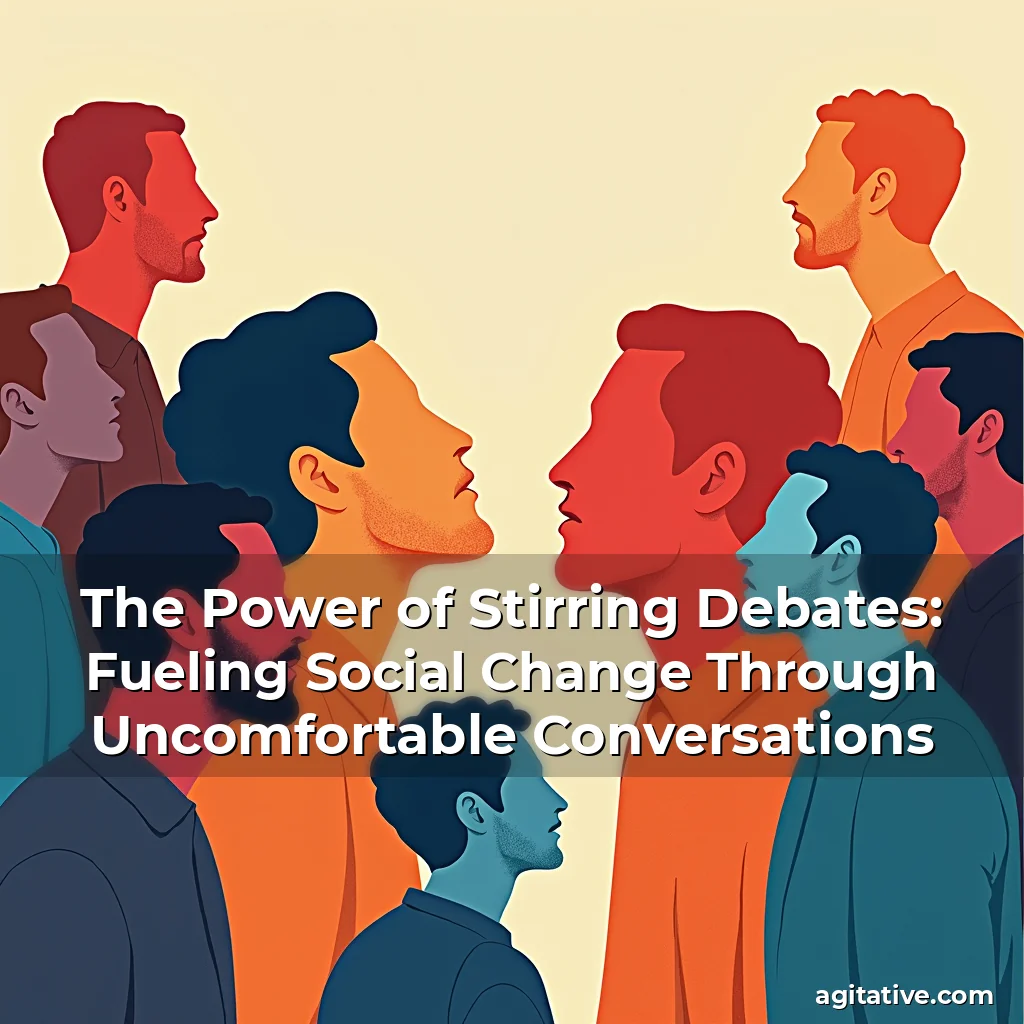
The Power of Stirring Debates: Fueling Social Change Through Uncomfortable Conversations
In an era defined by rapid technological advancement, global crises, and stark ideological divides, stirring debates have become essential tools for driving social progress. These are not mere exchanges of opinions—they are catalysts for challenging norms, dismantling systems of oppression, and envisioning radical alternatives to the status quo.
Activists and advocates know that real change often begins when people confront uncomfortable truths. By creating spaces for contentious yet constructive dialogue, communities can address systemic inequities, redefine power structures, and mobilize collective action toward justice.
The Role of Debate in Shaping Social Movements
Debates have historically been pivotal in shaping the trajectory of social movements. From the abolitionist campaigns of the 19th century to modern-day climate strikes, disagreements over tactics, priorities, and definitions of success have forced movements to refine their goals and methods.
These debates do not weaken movements—they strengthen them. When activists openly question assumptions, challenge leadership decisions, and propose alternative frameworks, they foster innovation and resilience. For example, the Black Lives Matter movement has evolved significantly through internal discussions about intersectionality, police reform, and economic equity.
- Fostering Critical Thinking: Engaging in robust debates compels participants to examine evidence, consider marginalized perspectives, and avoid complacency in advocacy efforts.
- Bridging Divides: Even heated arguments can serve as bridges between opposing groups when facilitated respectfully, enabling mutual learning and collaboration.
Why Comfort Zones Are Enemies of Progress
Social change requires stepping beyond comfort zones—a principle deeply embedded in the nature of stirring debates. Discussions that push individuals out of their ideological bubbles are rarely easy, but they are indispensable for growth.
Comfort zones breed stagnation. When activists prioritize harmony over honesty, they risk perpetuating harmful practices under the guise of unity. Conversely, embracing discomfort allows for honest critique and the reimagining of solutions.
The Cost of Avoiding Controversy
A 2021 Pew Research Center study found that nearly 68% of Americans believe society has become less united since 2016. This fragmentation underscores the risks of avoiding difficult conversations. Without deliberate engagement with divisive topics, movements may lose clarity and direction.
For instance, the failure to address internal conflicts within environmental organizations has led to criticism that their policies disproportionately harm low-income communities. Such oversights arise when debates about ethics and inclusion are sidelined in favor of expediency.
Crafting Effective Spaces for Debate
Creating environments where stirring debates thrive demands intentional design. Whether in virtual forums, town halls, or grassroots meetings, the physical and psychological safety of participants must be prioritized.
Educating facilitators in conflict resolution techniques ensures that disagreements remain respectful rather than destructive. Clear ground rules, active listening protocols, and time limits for contributions help maintain balance during intense discussions.
Case Study: The Climate Justice Movement’s Internal Dialogues
The climate justice movement offers a compelling case study in navigating complex debates. Early iterations of the movement were criticized for centering white voices and neglecting racial disparities in environmental policy. However, sustained internal critiques led to a broader embrace of intersectional approaches.
This evolution highlights the value of iterative feedback loops. By institutionalizing mechanisms for accountability and open dialogue, leaders demonstrated that even controversial debates can yield transformative outcomes.
The Ethical Imperative of Inclusive Dialogue
Inclusivity is not optional—it is foundational to meaningful debate. Excluding marginalized voices from discussions about their lived experiences undermines the legitimacy of activist work and reinforces existing hierarchies.
True inclusivity means actively seeking input from those most affected by oppressive systems, whether in housing policy, healthcare access, or criminal justice reform. Tokenistic gestures, such as inviting a few representatives from minority groups, fall far short of genuine inclusion.
Mechanisms for Amplifying Marginalized Voices
Structured processes like participatory budgeting, community-led workshops, and co-
To mitigate polarization, organizers can adopt moderation frameworks that emphasize empathy and factual accuracy. Encouraging users to share personal stories alongside data fosters human connection amid disagreement.
Additionally, creating “safe” vs. “brave” spaces intentionally is crucial. Safe spaces protect vulnerable participants, while brave spaces allow for direct confrontation of injustice. Both types of environments have roles depending on the context and goals of the discussion.
The Psychology Behind Resistance to Debate
Resistance to stirring debates often stems from fear—the fear of being wrong, ostracized, or exposed to painful realities. Psychological research shows that cognitive dissonance—the mental stress of holding conflicting beliefs—can trigger defensive reactions when confronted with contradictory information.
Yet, reframing resistance as a natural part of the journey can reduce defensiveness. Acknowledging emotional labor, validating participants’ feelings, and emphasizing shared humanity can ease tensions during high-stakes conversations.
Tips for Managing Emotional Reactions
Practicing mindfulness before and after debates helps participants regulate emotions. Techniques like deep breathing, journaling reflections, and scheduled check-ins provide outlets for processing difficult interactions.
Trained mediators play a vital role in deescalating conflicts. Their presence signals that the goal is not to “win” but to learn, thereby shifting group dynamics toward cooperation rather than competition.
Measuring the Impact of Stirring Debates
Evaluating the effectiveness of debates is challenging, as their impacts are often indirect and long-term. However, certain indicators can signal progress, such as increased civic participation, shifts in public opinion, or policy changes influenced by grassroots pressure.
Qualitative assessments—like participant testimonials, thematic analysis of discussion transcripts, and longitudinal studies—are equally valuable. These methods capture nuanced transformations that quantitative metrics alone cannot measure.
Data Points from Successful Campaigns
A 2022 report by the International Institute for Sustainable Development revealed that campaigns incorporating deliberative democracy principles saw a 40% increase in volunteer retention compared to traditional outreach models.
Similarly, the #MeToo movement’s emphasis on survivor testimonies reshaped workplace cultures globally, demonstrating how emotionally resonant debates can catalyze cultural shifts even without immediate legislative victories.
Overcoming Institutional Barriers to Debate
Institutional inertia poses significant obstacles to stirring debates, particularly in sectors dominated by entrenched interests. Bureaucratic red tape, legal restrictions, and corporate lobbying often silence dissenting voices or limit the scope of permissible discussions.
Grassroots movements must therefore employ creative strategies—from art-based protests to decentralized networks—to circumvent these barriers and reclaim the narrative around pressing social issues.
Leveraging Cultural Tools for Disruption
Art, music, literature, and performance have long served as vehicles for dissent. A mural depicting police brutality, a protest song critiquing capitalism, or a novel exploring gender inequality all contribute to broader conversations that transcend formal debate settings.
Such cultural interventions complement structured discussions by making abstract issues tangible and accessible, especially to audiences who may feel alienated from academic or political jargon.
The Future of Debate in the Age of AI and Automation
Rapid advancements in artificial intelligence present both opportunities and threats to the integrity of public debate. While AI tools can facilitate translation, transcribe meetings, and analyze sentiment, they also risk automating propaganda and spreading misinformation at scale.
Ensuring that AI serves as a tool for empowerment rather than manipulation requires rigorous oversight. Developers and activists must collaborate to embed ethical guidelines that prioritize transparency, accountability, and equitable access.
Potential Scenarios for AI-Augmented Advocacy
Imagine AI-powered chatbots that guide users through interactive simulations of policy scenarios, helping them understand the implications of different choices. Or machine-learning algorithms that identify patterns in hate speech to flag problematic content before it spreads widely.
However, these technologies must never replace human agency. True social change hinges on the capacity of individuals to think critically, empathize with others, and act collectively—not on algorithmic predictions or automated responses.
Conclusion
Stirring debates are not simply intellectual exercises—they are lifelines for social change. By confronting uncomfortable questions head-on, activists forge pathways to liberation, equity, and renewal that would otherwise remain obscured by complacency or fear.
Engage in these debates boldly, thoughtfully, and relentlessly. Every conversation that dares to disrupt the norm brings us closer to a world shaped by justice, dignity, and collective imagination.


news is a contributor at Agitative. We are committed to providing well-researched, accurate, and valuable content to our readers.
You May Also Like


Stirring Debates on Social Media Effectively
Fuel Your Movement: Mastering the Art of Stirring Productive Debates for Social Change In today's rapidly evolving landscape of social...

Provocative Ideas vs Controversial Statements
Provocative Ideas vs Controversial Statements In an age where information flows faster than ever before, distinguishing between provocative ideas and...

Thought-Provoking Discussions About Current Events
Thought-Provoking Discussions About Current Events In an age defined by rapid technological advancement, political upheaval, and environmental crisis, engaging in...
Emotional Triggers in Crisis Communication
Emotional Triggers in Crisis Communication In times of upheaval, emotional triggers become powerful catalysts that can ignite action or deepen...