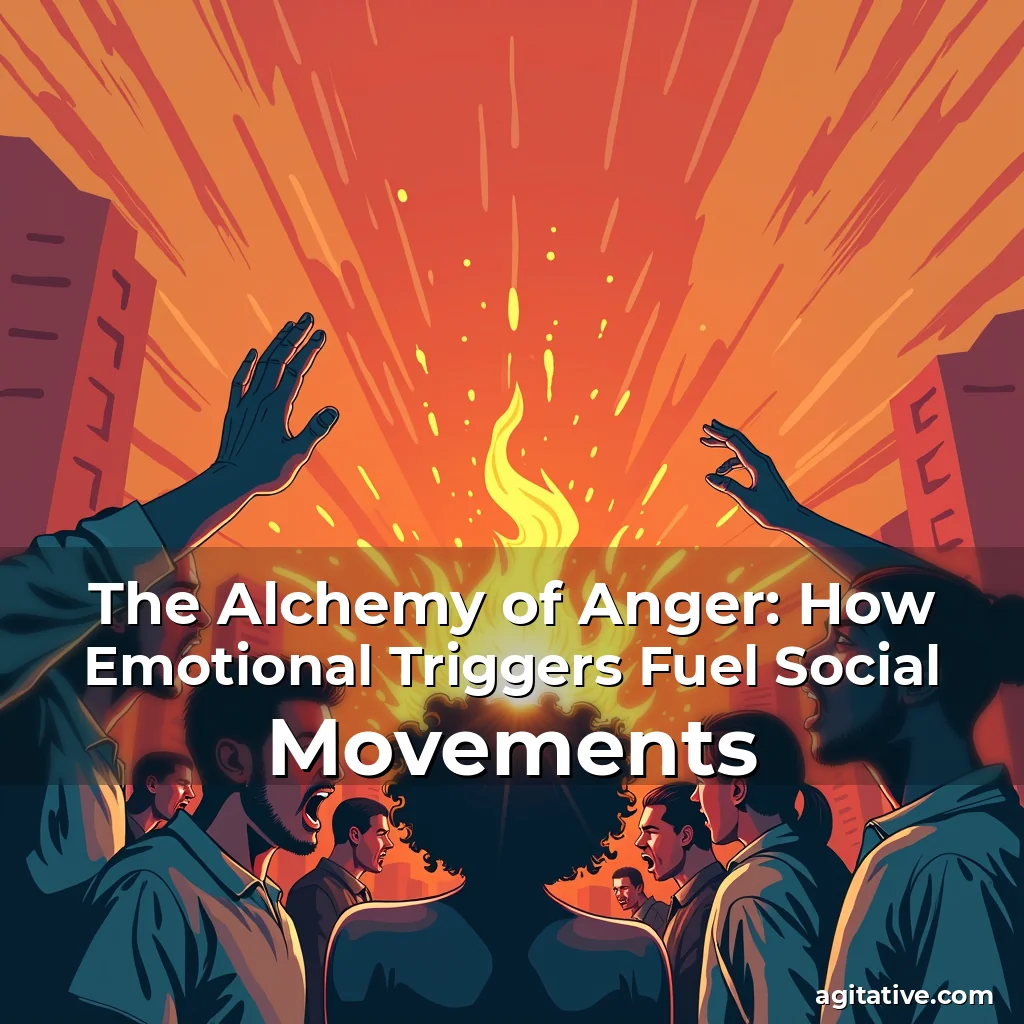
The Alchemy of Anger: How Emotional Triggers Fuel Social Movements
In an age where outrage is currency and protest is power, understanding emotional triggers has become essential for activists seeking to ignite meaningful change. These triggers—those raw nerve endings in our psyche—are what turn passive observers into fervent advocates when activated correctly.
From the civil rights marches of the 60s to today’s climate strikes, history shows us that the most effective movements are those that tap into universal human emotions. The challenge lies not in finding these triggers but in wielding them responsibly without succumbing to destructive patterns of behavior.
Decoding the Human Psyche: What Are Emotional Triggers?
At their core, emotional triggers are psychological responses rooted deep within our neural architecture. They manifest as sudden surges of anger, fear, joy, or sadness triggered by seemingly minor events.
These reactions aren’t random; they’re hardwired survival mechanisms passed down through generations. When we encounter situations resembling past traumas, our brains activate fight-or-flight responses before conscious thought can intervene.
- Social rejection activates ancient brain regions associated with physical pain processing
- Cognitive dissonance creates mental discomfort when beliefs clash with reality
- Moral injury occurs when individuals witness actions contradicting deeply held values
For activists, recognizing these biological underpinnings helps explain why certain messages resonate more than others. It also underscores the importance of crafting narratives that align with existing value systems rather than forcing new ideologies onto unwilling audiences.
The key insight here is that while we can’t control how people react emotionally, we can anticipate common trigger points across cultures and demographics. This knowledge becomes particularly powerful when strategically applied to movement building efforts.
The Fire Within: Why Emotion Drives Activism More Than Logic
Neuroscientific research reveals fascinating truths about human decision-making processes. Studies show that emotional arousal enhances memory retention up to fourfold compared to purely rational arguments alone.
This explains why passionate speeches often leave deeper impressions than carefully constructed policy briefs. When we feel something intensely, our bodies release neurotransmitters like dopamine which create lasting neurological imprints.
A compelling example comes from the anti-apartheid movement in South Africa. While economic data exposed systemic inequalities, it was the visceral horror of segregated public facilities that galvanized mass participation.
Activists who understand this principle learn to balance factual information with emotive storytelling techniques. Effective messaging combines statistical evidence with personal anecdotes that evoke shared humanity across divides.
Weaponizing Empathy: Constructive Uses of Emotional Triggers
Empathy isn’t inherently pacifist—it can be sharpened into a tool for justice when wielded with precision. Strategic use of empathetic triggers allows activists to bridge ideological gaps between disparate groups.
Consider the global response to refugee crises. Rather than focusing solely on immigration policies, successful campaigns highlighted individual stories of loss and resilience that transcended political boundaries.
Brain imaging studies confirm that hearing someone else’s narrative activates mirror neurons—the same brain cells active during our own experiences. This neurological mirroring fosters connection even among strangers.
By curating content that invites viewers to see themselves in others’ struggles, organizers can transform apathy into action. The challenge remains ensuring empathy doesn’t devolve into sentimentality devoid of practical solutions.
Dangerous Depths: When Emotional Triggers Become Destructive Forces
While emotional triggers can mobilize communities toward positive ends, they also have a dark side that must be vigilantly monitored. History provides cautionary tales of well-intentioned movements descending into chaos due to unchecked emotional forces.
The rise of online hate speech offers a modern case study in how easily collective anger can spiral out of control. Algorithms designed to maximize engagement often prioritize inflammatory content over nuanced discourse.
Psychological experiments demonstrate that anonymity reduces self-regulation, leading to behaviors uncharacteristic of individuals in face-to-face interactions. Online echo chambers amplify this effect exponentially.
Recognizing these risks requires developing strategies to channel emotional energy constructively. Skilled moderators must distinguish between healthy passion and toxic rhetoric without stifling necessary dissent.
Bridging Divides: Using Emotional Intelligence in Movement Building
Emotional intelligence—the ability to perceive, understand, and manage feelings—becomes crucial when navigating complex activist environments. Leaders who master this skill foster inclusive spaces where diverse perspectives coexist productively.
One notable technique involves “emotional mapping,” where organizers identify key emotional touchpoints within target communities. This process resembles creating a topographic map of psychological terrain.
Such maps reveal which issues provoke strongest reactions, helping strategists tailor approaches accordingly. However, ethical considerations demand careful handling of sensitive material that could retraumatize vulnerable populations.
Effective leaders also cultivate self-awareness to avoid projecting their own biases onto others. This meta-cognition prevents assumptions about what constitutes a valid emotional response in different cultural contexts.
Historical Lessons: Case Studies in Triggered Movements
Examining past movements offers invaluable insights into both successes and failures related to emotional triggering. The Civil Rights Act of 1964 exemplifies strategic activation of moral outrage against institutionalized racism.
Videos of peaceful protesters being violently attacked created indelible images that transcended political affiliations. These visual triggers formed part of a broader media strategy that shaped national consciousness.
Conversely, the failure of some environmental campaigns highlights pitfalls of misjudged emotional appeals. Overly dire predictions sometimes alienate potential supporters rather than inspiring action.
Analyzing these contrasting outcomes teaches us the necessity of calibration—knowing when to emphasize urgency versus offering hope, when to confront injustice head-on versus suggesting incremental steps forward.
Navigating Complexity: Emotional Triggers Across Cultural Contexts
What works as an emotional catalyst in one culture may backfire spectacularly elsewhere. Understanding cross-cultural differences becomes imperative for global movements aiming to unify diverse populations.
Powers of persuasion vary significantly based on historical trauma, religious beliefs, and socioeconomic conditions shaping each society’s emotional landscape. A message resonant in North America might seem foreign or even offensive in another region.
Successful transnational campaigns invest heavily in local context analysis before deploying any emotional appeal. This includes consulting community elders, artists, and educators familiar with regional sensitivities.
Culturally responsive activism acknowledges that while basic human emotions remain constant, their expression varies dramatically according to societal norms and values.
Ethical Considerations: Balancing Passion with Responsibility
With great emotional power comes great responsibility—an axiom especially relevant for contemporary social movements. Ethical leadership demands awareness of potential consequences arising from deliberate emotional manipulation.
Transparency about intentions behind particular messaging choices builds trust within communities. People respond positively to honesty about aims—even when those aims involve provoking strong reactions.
There exists a fine line between motivating action and exploiting vulnerability. Responsible activists walk this tightrope by always pairing emotional calls to arms with concrete pathways towards tangible progress.
Ultimately, ethics guide whether emotion serves as a force for liberation or merely fuels cyclical patterns of conflict without resolution.
Forging New Paths: Innovation in Triggering Strategies
As technology evolves, so too do methods for harnessing emotional triggers creatively. Virtual reality simulations offer unprecedented opportunities to immerse users in alternative realities that spark profound reflections.
Interactive platforms now allow participants to experience life through different lenses—instantly transforming abstract statistics into lived realities. This technological advancement presents exciting possibilities for experiential learning and empathy cultivation.
However, innovation must proceed cautiously. There’s risk of reducing complex human experiences to simplified digital representations that lack nuance and depth. True transformation requires preserving the full richness of real-life encounters.
Still, thoughtful integration of emerging tools promises to expand the toolkit available to conscientious activists striving for equitable futures.
Conclusion
Understanding emotional triggers represents both opportunity and challenge for modern activists. By decoding the psychology behind human reactions, we gain remarkable leverage to inspire collective action toward transformative goals.
Yet mastery of these principles demands humility, wisdom, and unwavering commitment to ethical practice. Only then can we ensure that emotional power becomes a force for healing rather than destruction.

news is a contributor at Agitative. We are committed to providing well-researched, accurate, and valuable content to our readers.