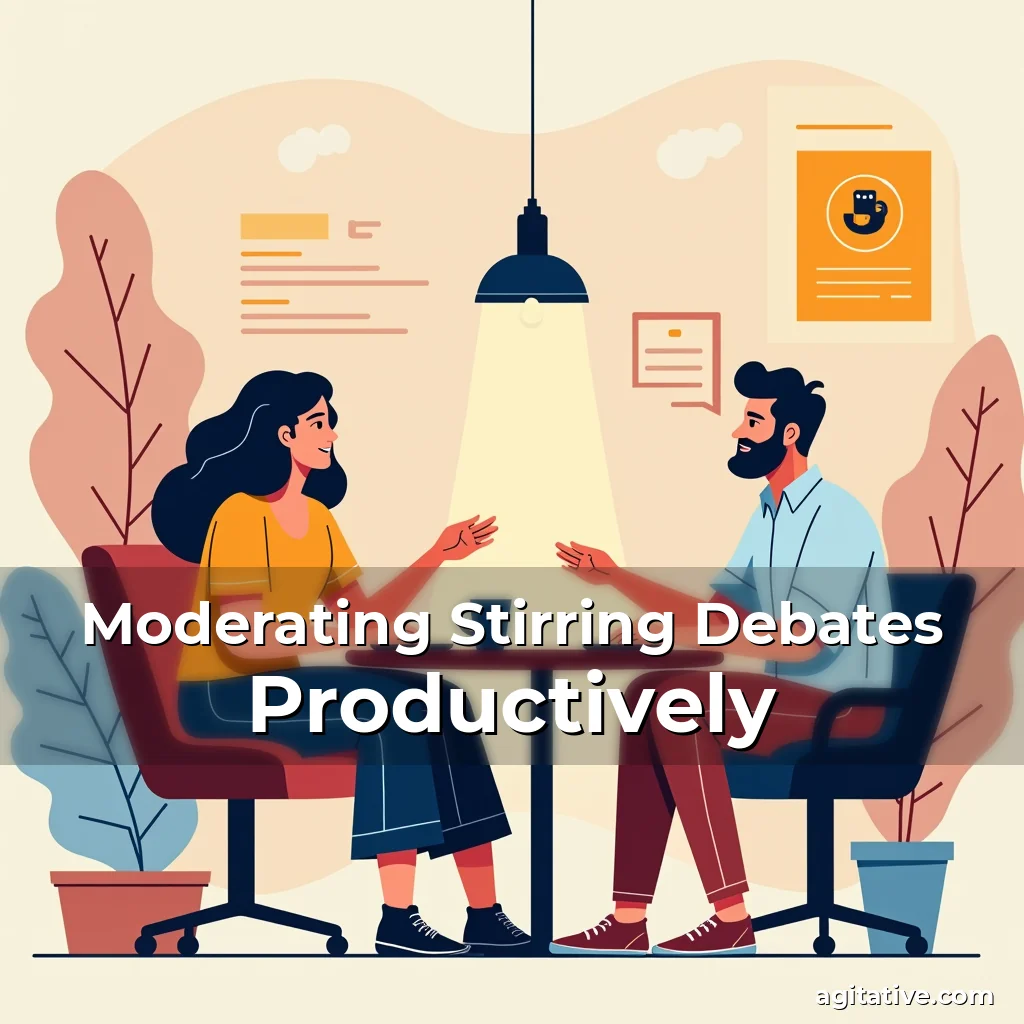
Moderating Stirring Debates Productively
In an era defined by rapid information exchange and heightened societal awareness, stirring debates have become both inevitable and essential in shaping public discourse around social change and activism. These discussions are not merely academic exercises but powerful tools that can ignite movements, challenge oppressive systems, and redefine collective values.
The art of moderating such debates lies at the intersection of facilitation, empathy, and strategic communication. It requires a nuanced understanding of human dynamics, cultural contexts, and the delicate balance between fostering open dialogue and preventing harmful escalation.
The Power and Peril of Activist Discourse
Social change is rarely achieved through passive observation; it demands active engagement, often manifesting as passionate debate within activist communities. Such conversations serve dual purposes—they act as catalysts for innovation while simultaneously revealing the fractures within existing ideologies.
However, when poorly managed, these debates risk devolving into ideological battlegrounds rather than constructive dialogues. This transformation can lead to polarization, misinformation spread, and even self-censorship among participants who fear backlash.
- Constructive disagreement: When framed appropriately, differing viewpoints can enhance problem-solving capabilities by exposing blind spots and generating creative solutions.
- Destructive conflict: Unchecked emotional intensity without clear boundaries may result in personal attacks overshadowing substantive discussion.
Fostering Inclusive Dialogue Spaces
Cultivating environments where diverse perspectives feel safe to express begins with intentional design choices regarding physical spaces, digital platforms, and interpersonal norms. A well-moderated setting allows marginalized voices greater visibility without silencing dominant opinions.
This inclusivity extends beyond mere representation—it involves actively inviting participation from underrepresented groups through targeted outreach efforts and creating accessible formats suitable for various learning styles.
A critical component of inclusive moderation includes implementing ground rules collaboratively established by all stakeholders before any formal proceedings commence. These guidelines help set expectations around respectful behavior, time management protocols, and mechanisms for addressing concerns promptly.
Navigating Emotional Landscapes
Emotional intelligence plays a pivotal role in successful debate moderation. Recognizing nonverbal cues—such as body language shifts or tone changes—can alert moderators to rising tensions long before overt hostility emerges.
Developing emotional resilience enables moderators themselves to remain composed amidst heated exchanges, modeling calmness which encourages others to adopt similar behaviors. This composure helps maintain focus on issues rather than individuals during contentious moments.
One effective technique involves using reflective listening strategies: paraphrasing speakers’ statements back to them confirms comprehension while also giving them space to elaborate further if desired. This practice reinforces mutual respect and ensures clarity across different interpretations.
Strategies for Managing Contentious Topics
Anticipating potential flashpoints within any given topic area allows moderators to prepare mitigating tactics beforehand. Researching historical precedents related to current events provides context that might temper immediate reactions based solely on present circumstances.
Implementing structured frameworks—like timed speaking intervals or designated response periods—helps prevent dominance by particularly vocal members who could otherwise monopolize conversation flow. Such structures ensure equitable opportunity for all participants regardless of their natural inclination towards assertiveness.
When disagreements escalate past productive levels, having predefined de-escalation procedures proves invaluable. Techniques range from temporarily pausing discussions until cooler heads prevail to employing neutral third-party mediators trained specifically for high-stakes negotiations.
Bridging Ideological Divides Through Shared Goals
Identifying common objectives shared across seemingly opposing factions
The art of moderating such debates lies at the intersection of facilitation, empathy, and strategic communication. It requires a nuanced understanding of human dynamics, cultural contexts, and the delicate balance between fostering open dialogue and preventing harmful escalation.
The Power and Peril of Activist Discourse
Social change is rarely achieved through passive observation; it demands active engagement, often manifesting as passionate debate within activist communities. Such conversations serve dual purposes—they act as catalysts for innovation while simultaneously revealing the fractures within existing ideologies.
However, when poorly managed, these debates risk devolving into ideological battlegrounds rather than constructive dialogues. This transformation can lead to polarization, misinformation spread, and even self-censorship among participants who fear backlash.
- Constructive disagreement: When framed appropriately, differing viewpoints can enhance problem-solving capabilities by exposing blind spots and generating creative solutions.
- Destructive conflict: Unchecked emotional intensity without clear boundaries may result in personal attacks overshadowing substantive discussion.
Fostering Inclusive Dialogue Spaces
Cultivating environments where diverse perspectives feel safe to express begins with intentional design choices regarding physical spaces, digital platforms, and interpersonal norms. A well-moderated setting allows marginalized voices greater visibility without silencing dominant opinions.
This inclusivity extends beyond mere representation—it involves actively inviting participation from underrepresented groups through targeted outreach efforts and creating accessible formats suitable for various learning styles.
A critical component of inclusive moderation includes implementing ground rules collaboratively established by all stakeholders before any formal proceedings commence. These guidelines help set expectations around respectful behavior, time management protocols, and mechanisms for addressing concerns promptly.
For instance, establishing a rotating leadership model where different group members take turns facilitating segments ensures that power dynamics do not concentrate in a single individual’s hands. Similarly, incorporating anonymous suggestion boxes or digital comment boards gives quieter participants a voice without forcing them into uncomfortable spotlight situations.
Navigating Emotional Landscapes
Emotional intelligence plays a pivotal role in successful debate moderation. Recognizing nonverbal cues—such as body language shifts or tone changes—can alert moderators to rising tensions long before overt hostility emerges.
Developing emotional resilience enables moderators themselves to remain composed amidst heated exchanges, modeling calmness which encourages others to adopt similar behaviors. This composure helps maintain focus on issues rather than individuals during contentious moments.
One effective technique involves using reflective listening strategies: paraphrasing speakers’ statements back to them confirms comprehension while also giving them space to elaborate further if desired. This practice reinforces mutual respect and ensures clarity across different interpretations.
Additionally, recognizing triggers that cause emotional spikes—whether rooted in personal trauma, systemic injustice, or generational divides—is crucial for preemptively diffusing volatile scenarios before they spiral out of control.
Strategies for Managing Contentious Topics
Anticipating potential flashpoints within any given topic area allows moderators to prepare mitigating tactics beforehand. Researching historical precedents related to current events provides context that might temper immediate reactions based solely on present circumstances.
Implementing structured frameworks—like timed speaking intervals or designated response periods—helps prevent dominance by particularly vocal members who could otherwise monopolize conversation flow. Such structures ensure equitable opportunity for all participants regardless of their natural inclination towards assertiveness.
When disagreements escalate past productive levels, having predefined de-escalation procedures proves invaluable. Techniques range from temporarily pausing discussions until cooler heads prevail to employing neutral third-party mediators trained specifically for high-stakes negotiations.
Moreover, integrating peer mediation programs empowers participants to resolve minor conflicts autonomously, preserving the moderator’s capacity to address larger-scale challenges arising from external factors unrelated to internal group dynamics.
Bridging Ideological Divides Through Shared Goals
Identifying common objectives shared across seemingly opposing factions creates fertile ground for meaningful collaboration. Even deeply divided groups usually agree on fundamental principles such as justice, equality, or freedom—these universal aspirations form solid foundations upon which compromise becomes possible.
Highlighting success stories where disparate entities found mutually beneficial resolutions serves as inspiration rather than propaganda. Real-world examples demonstrate practical pathways toward reconciliation despite initial differences.
Encouraging cross-pollination between activists working on adjacent yet distinct causes fosters unexpected alliances capable of amplifying impact exponentially compared to isolated initiatives operating independently.
To facilitate this synergy, organizing intergroup workshops focused on overlapping themes—such as climate justice intersecting with racial equity or economic disparity intertwined with gender inequality—creates opportunities for organic partnership formation grounded in shared interests rather than forced cooperation.
Leveraging Technology for Enhanced Moderation
Modern technology offers innovative tools designed explicitly for managing complex dialogues effectively. From AI-driven sentiment analysis software identifying toxic patterns emerging mid-discussion to interactive polling features gauging real-time opinion shifts, technological advancements empower moderators with unprecedented control over narrative direction.
Virtual reality platforms enable immersive simulations allowing participants to experience alternative perspectives firsthand—an especially potent method for cultivating empathy among those initially resistant to changing views.
Data analytics provide quantitative insights useful in tailoring future engagements better aligned with participant preferences and needs identified through previous interactions. Understanding demographic breakdowns facilitates personalized approaches ensuring relevance across varying age brackets and backgrounds.
Furthermore, blockchain-based voting systems introduce transparency in decision-making processes, eliminating concerns about vote tampering and increasing trust in outcomes reached collectively through consensus-building techniques facilitated digitally.
Educational Components Within Debate Frameworks
Incorporating educational elements naturally within debating processes transforms raw emotionality into informed advocacy. Providing factual references alongside subjective arguments strengthens credibility while reducing reliance purely on anecdotal evidence susceptible to misinterpretation.
Workshops preceding major deliberations equip attendees with foundational knowledge necessary for intelligent contribution. Covering topics ranging from basic constitutional rights up through advanced policy implications prepares audiences adequately before they engage critically with subject matter experts.
Interactive Q&A sessions following presentations create dynamic feedback loops reinforcing comprehension. Participants gain clarification on confusing aspects while educators receive direct input helping refine subsequent instructional materials accordingly.
Integrating multimedia resources such as documentaries, infographics, and expert interviews enriches the informational landscape available to debaters, enabling them to reference authoritative sources confidently during discussions rather than speculating from incomplete understandings.
Measuring Impact Beyond Immediate Outcomes
Evaluating effectiveness goes far beyond counting attendance numbers alone. Assessments should consider qualitative measures including perceived value derived from experiences, increased willingness to participate in future activities, and measurable behavioral changes post-engagement.
Longitudinal studies tracking participants’ involvement trajectories offer deeper insight into sustained influence generated through continued exposure to thoughtfully moderated debates. Such data informs continuous improvement cycles enhancing program efficacy progressively over time.
Feedback mechanisms embedded throughout event structures allow ongoing refinement tailored precisely to evolving community needs. Regular surveys combined with informal check-ins capture multifaceted dimensions contributing positively toward overall growth metrics.
Additionally, monitoring media coverage surrounding organized debates reveals broader societal resonance achieved through strategic framing of narratives—a critical indicator of whether discussions successfully translate into mainstream consciousness influencing policymaking agendas.
Conclusion
Successfully navigating stirring debates requires balancing structure with flexibility, authority with approachability, and idealism with pragmatism. Effective moderation doesn’t eliminate controversy but channels it constructively toward tangible progress.
By embracing complexity instead of avoiding it, we unlock new possibilities previously obscured by fear of discordance. Ultimately, our ability to transform divisive conversations into collaborative endeavors defines how much genuine change we’re willing to pursue together.

news is a contributor at Agitative. We are committed to providing well-researched, accurate, and valuable content to our readers.