


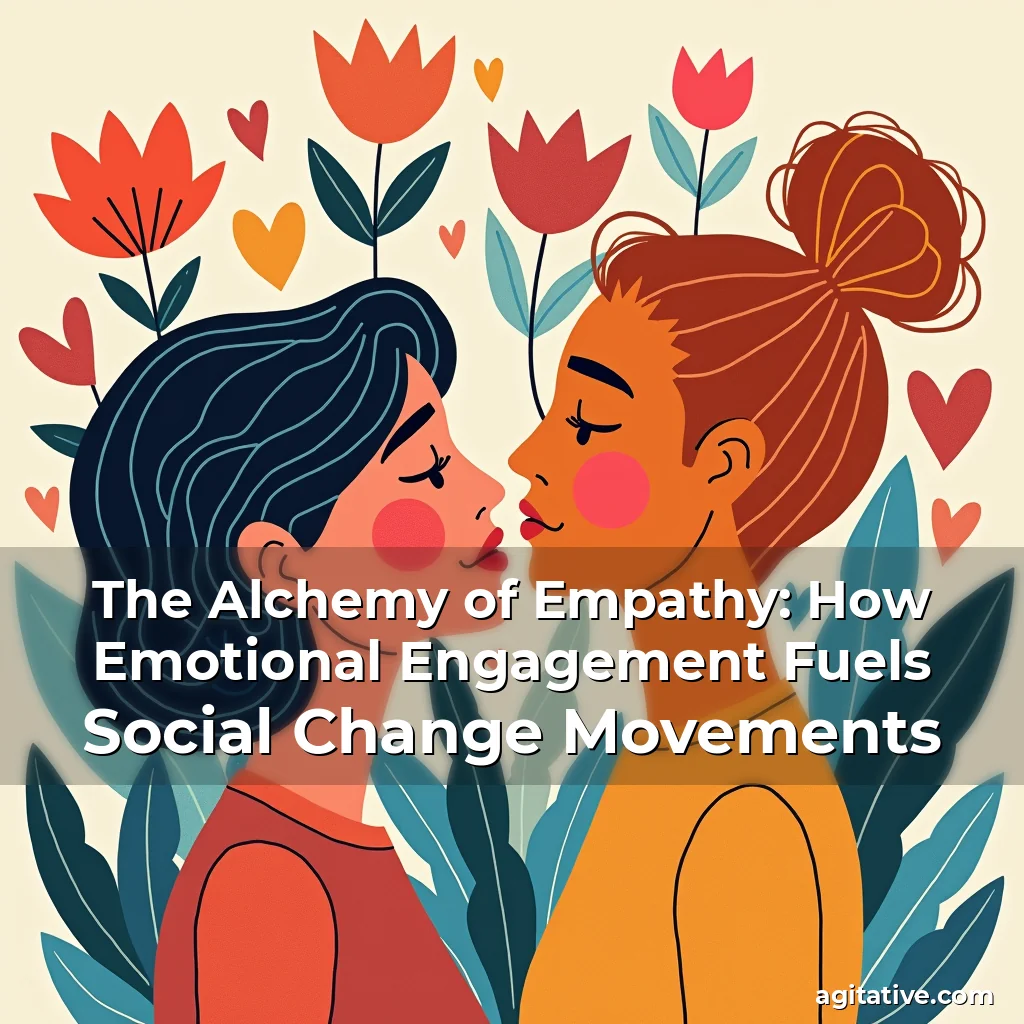
The Alchemy of Empathy: How Emotional Engagement Fuels Social Change Movements
In an era defined by digital noise and fleeting attention spans, the power of emotional engagement remains the cornerstone of transformative social movements. It is not merely about stirring feelings but crafting resonant narratives that ignite collective action.
This exploration delves into how activists can harness empathy as both a weapon and a compass in their pursuit of justice and equity. Through understanding human emotions at a granular level, we unlock new dimensions of influence within any cause-driven campaign.
The Neuroscience Behind Emotionally Resonant Messaging
Recent studies from Harvard’s Center for Brain Science reveal fascinating truths about how our brains respond to emotionally charged messages. When individuals encounter stories that trigger deep emotional responses, neural pathways associated with memory retention become significantly activated.
This heightened cognitive activity doesn’t just make information stick—it transforms passive observers into active participants. Researchers have found that people who experience strong emotional reactions are up to three times more likely to take concrete actions related to the message they received.
Emotions act as mental shortcuts:
- Danger signals activate fight-or-flight mechanisms, creating urgency
- Stories of suffering foster moral outrage, prompting protective instincts
- Joyful outcomes inspire hope, making long-term commitments feel rewarding
The amygdala plays a central role in these processes. This almond-shaped structure acts as the brain’s emergency alert system, rapidly evaluating potential threats or rewards before rational processing begins. Activists who understand this biological framework gain critical leverage over traditional informational campaigns.
When designing messaging strategies, focusing solely on facts becomes insufficient. Even well-researched data loses impact without the right emotional context. Skilled communicators weave factual accuracy with compelling storytelling techniques to create messages that resonate on multiple levels.
Crafting Authentic Narratives That Spark Action
Authenticity forms the bedrock of effective emotional engagement in activist work. People instinctively detect insincerity, especially when discussing deeply personal issues. A study published in the Journal of Experimental Psychology showed that audiences remember fabricated testimonials far less vividly than real-life accounts.
Real-world examples abound where raw authenticity has turned small initiatives into global movements. Consider the viral video footage of George Floyd’s death—its unfiltered presentation created a visceral connection between viewers and the injustice being witnessed.
Creating authentic narratives requires more than simply sharing true stories. It involves building relationships with storytellers, ensuring they’re comfortable with their roles while respecting their experiences. This process often takes months rather than days, emphasizing patience over immediacy.
The most impactful stories come from unexpected places. They might originate from marginalized communities, grassroots organizers, or even reluctant witnesses who suddenly find themselves at the center of historical events. These organic origins lend credibility that polished productions cannot replicate.
The Power of Visual Storytelling in Modern Activism
Visual media has emerged as one of the most potent tools for generating emotional engagement. From powerful protest signs to professionally produced documentaries, imagery speaks across cultural and linguistic barriers.
Research conducted by Stanford University indicates that visual stimuli elicit stronger emotional responses than text-based communication alone. Images bypass language filters and connect directly with primal parts of our consciousness.
Consider the iconic photograph of a lone demonstrator facing down a line of tanks during Tiananmen Square protests. Decades later, its emotional resonance continues to stir debate and reflection worldwide. Such images transcend time, becoming symbols of broader struggles.
Modern technology has expanded creative possibilities exponentially. Drone footage captures sweeping perspectives, VR experiences immerse users in environments they might never physically visit, and AI-generated art challenges conventional notions of representation.
However, ethical considerations remain paramount. Manipulating visuals through editing software can distort reality, undermining trust in activist causes. Responsible use demands transparency about post-production choices and maintaining integrity in visual documentation.
Leveraging Personal Stories for Broader Impact
Individual testimonies hold immense power to transform abstract concepts into tangible realities. Hearing someone describe their lived experience creates a bridge between theory and practice that pure statistics rarely achieve.
A report by the Pew Research Center highlights that personal anecdotes increase message recall by nearly 60% compared to statistical summaries. This phenomenon occurs because human brains naturally prioritize narrative structures over numerical data.
When collecting personal stories, it’s crucial to approach subjects with sensitivity and respect. Trauma survivors may require specialized support systems, particularly when recounting painful memories for public consumption.
Ethical storytelling also requires careful consideration of consent. Individuals must fully understand what will happen to their story after sharing it, including potential exposure risks and long-term implications.
Building Sustainable Emotional Connections Within Communities
Sustained movement growth depends on cultivating lasting emotional bonds among participants. Casual interest quickly fades without ongoing engagement opportunities. Regular check-ins, shared rituals, and meaningful participation all contribute to deeper commitment.
Community-building efforts benefit greatly from incorporating elements of play and creativity. Art workshops, music sessions, and collaborative projects provide outlets for expression beyond political rhetoric.
Trust development follows predictable patterns over time. Initial interactions establish basic rapport; repeated encounters deepen understanding; shared experiences forge genuine connections. This progression mirrors relationship formation outside activist contexts.
Maintaining momentum requires acknowledging both successes and setbacks openly. Transparent dialogue prevents disillusionment while reinforcing communal resilience against opposition forces.
Fostering Emotional Intelligence Among Activist Groups
Effective activism necessitates developing emotional intelligence within teams working toward common goals. Recognizing individual emotional states enables better conflict resolution and strategic decision-making.
Leadership training programs increasingly emphasize EQ (emotional quotient) alongside IQ metrics. Understanding group dynamics helps prevent burnout while optimizing team performance under pressure.
Regular team reflections offer invaluable insight into evolving emotional landscapes. Identifying stress points early allows proactive measures to maintain morale and productivity levels.
Empathetic listening skills prove essential during disagreements. Active listening fosters mutual respect, transforming potential conflicts into constructive dialogues focused on solutions rather than blame attribution.
Navigating Ethical Dilemmas in Emotional Advocacy
While emotional engagement drives significant progress, ethical boundaries must always be respected. Manipulative tactics risk damaging credibility and alienating target audiences.
Transparency remains vital in all communications. Misleading portrayals of situations—whether intentional or unintentional—undermine trust foundations painstakingly built through consistent advocacy.
Bias awareness becomes particularly important when curating content for wider dissemination. Selective storytelling might inadvertently reinforce existing stereotypes instead of challenging them.
Responsible use means balancing emotional appeal with factual accuracy. Compromise between heart-wrenching narratives and objective truth ensures sustained public confidence in movement objectives.
Cultivating Long-Term Commitment Through Shared Values
Lasting societal change requires moving beyond temporary outrage towards enduring conviction rooted in core values. Shared principles create sustainable motivation that outlasts immediate crises.
Identifying universal values such as dignity, fairness, and solidarity provides stable anchors amidst shifting political climates. These foundational beliefs guide decisions during uncertain times.
Value alignment strengthens community cohesion. Members united around similar philosophical frameworks demonstrate greater resilience against external pressures seeking to divide groups.
Ritualistic practices help reinforce these values. Annual commemorations, symbolic gestures, and recurring traditions serve as constant reminders of collective purpose and identity.
Measuring the Impact of Emotional Engagement Strategies
Assessing effectiveness goes beyond counting likes or shares. Meaningful evaluation considers behavioral changes resulting from emotional appeals.
Surveys measuring attitude shifts provide quantitative data on campaign success rates. However, qualitative feedback offers richer insights into why particular approaches worked or failed.
Longitudinal studies tracking participant evolution show how initial emotional connections translate into lasting involvement. These analyses identify patterns useful for refining future strategies.
Data triangulation enhances measurement reliability. Combining self-reported surveys with observational records paints a fuller picture of actual engagement levels versus perceived ones.
Conclusion
Emotional engagement stands as the defining force behind successful modern activism. Its ability to convert abstract ideals into tangible actions reshapes societies from within.
By mastering the delicate balance between heartfelt storytelling and responsible advocacy, today’s changemakers equip themselves with unparalleled capacity to effect real transformation. This alchemical fusion of emotion and intellect becomes the catalyst for lasting social revolution.


news is a contributor at Agitative. We are committed to providing well-researched, accurate, and valuable content to our readers.
You May Also Like

Digital vs Traditional Influential Campaigns
The Evolution of Activism in the Digital Age: How Campaigns Shape Social Change In an era defined by digital transformation,...

Challenging Norms in Corporate Culture
Redefining Boundaries: The Power of Challenging Social Norms Through Activism In an era where conformity often masquerades as progress, challenging...
Measuring Success in Movement Building
Measuring Success in Movement Building Movement building is not simply about organizing protests or raising awareness—it's an intricate process that...
Peaceful Agitation Techniques in Protest
Strategic Disruption: Mastering Nonviolent Agitation for Social Change In an era where voices demanding justice echo across digital platforms and...