Social Movements vs Political Campaigns
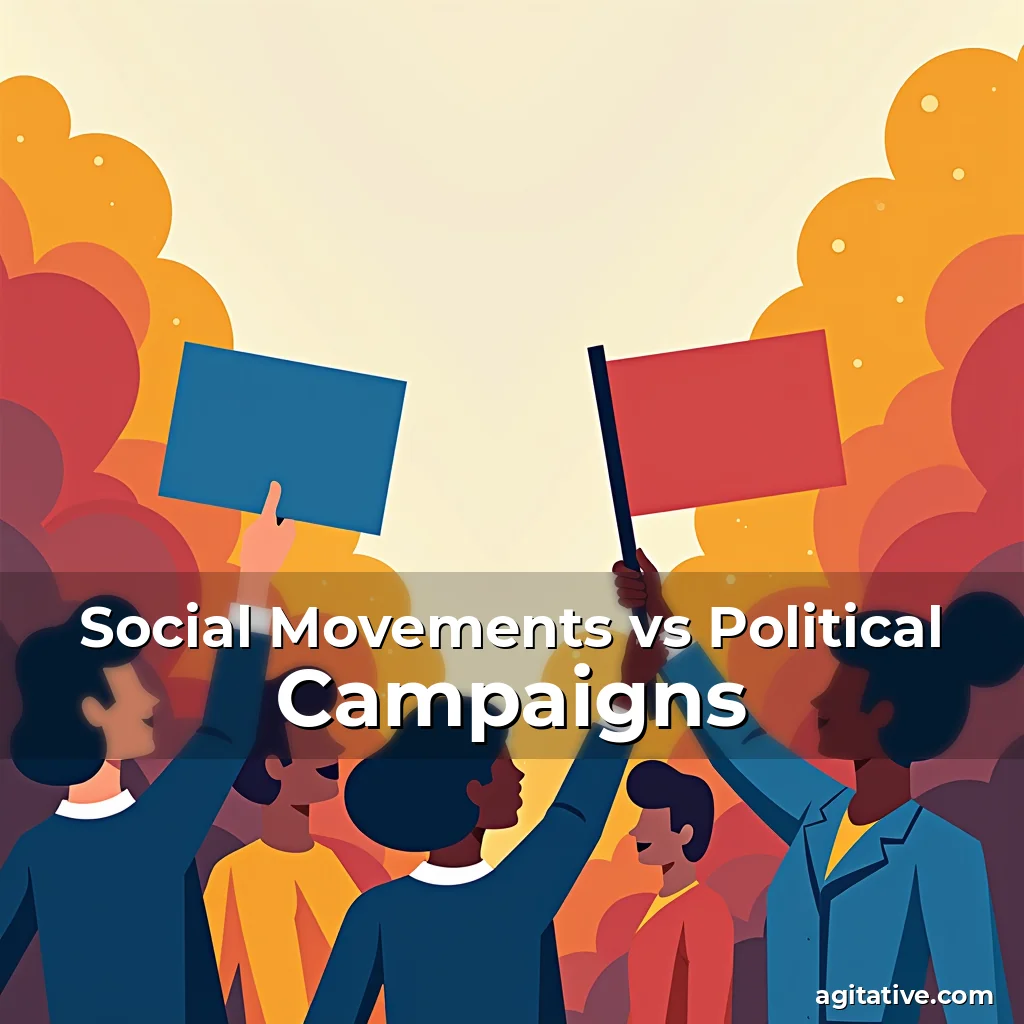
Social movements are powerful forces that drive transformation by uniting individuals around shared causes. Unlike political campaigns focused primarily on electing leaders, these movements prioritize systemic change through collective action. Their influence often extends beyond immediate goals, shaping societal norms and policies over time.
The distinction between social movements and traditional politics is critical for activists seeking long-term impact. While elections offer direct pathways to power, sustained grassroots mobilization can redefine cultural values and institutional frameworks. This duality presents both challenges and opportunities for those committed to progressive change.
Understanding Social Movements
A social movement emerges when people organize collectively to address issues they perceive as unjust. These movements gain momentum through shared grievances, common objectives, and strategic coordination among diverse participants. They operate across various scales, from local community initiatives to global advocacy efforts.
Differentiating social movements from other forms of group activity lies in their emphasis on structural transformation rather than individual benefit. Activists engage not only to raise awareness but also to push for policy reforms, legal protections, and cultural shifts. This dual focus sets them apart from interest groups limited to narrower agendas.
Successful movements often employ a range of tactics including protests, lobbying, education, and digital organizing. The choice of strategy depends on factors such as public sentiment, resource availability, and the nature of opposition faced. Flexibility and adaptability become essential qualities for sustaining momentum.
- Cultural Change: Movements reshape societal attitudes towards issues like gender equality and environmental protection through sustained engagement and storytelling.
- Institutional Reform: Effective campaigns target legislative changes, judicial decisions, and administrative policies to embed progress within existing systems.
Historical examples illustrate how movements have influenced key moments in history. From civil rights marches to climate strikes, organized resistance has repeatedly challenged oppressive structures while advocating for inclusive futures. These patterns continue to inform contemporary struggles for justice and equity.
The evolution of communication technologies has transformed modern activist strategies. Digital platforms enable rapid information sharing, virtual participation, and decentralized coordination. However, reliance on online tools also raises concerns about misinformation and platform dependency.
Political Campaigns and Their Limitations
While political campaigns play an integral role in governance, they face inherent limitations compared to grassroots movements. Candidates running for office must navigate complex electoral systems designed to favor established powers. Their ability to enact meaningful reform often hinges on compromise and negotiation with entrenched interests.
Election cycles create artificial timelines that may conflict with the urgent demands of social justice work. Policies promising sweeping change frequently get diluted during legislative processes, leading to incremental outcomes instead of transformative results. This gap highlights the need for parallel organizing outside formal political channels.
Campaigns typically rely on finite resources and media attention to reach voters. In contrast, movements cultivate enduring networks capable of sustained pressure without depending solely on periodic election events. This difference becomes particularly evident during times of crisis when quick responses are necessary.
Maintaining visibility remains a constant challenge for politicians vying for support. Social media algorithms dictate what content reaches wider audiences, creating obstacles for candidates who lack substantial funding or celebrity endorsements. Meanwhile, movements leverage organic outreach methods resistant to algorithmic manipulation.
Strategic Synergy Between Movements and Politics
Despite apparent differences, there exists significant potential for collaboration between social movements and elected officials. When aligned properly, their combined strengths can amplify impact across multiple levels of society. This synergy requires careful navigation of ideological divides and operational priorities.
Governors, legislators, and mayors hold considerable authority to implement policies supporting ongoing campaigns. Strategic alliances allow movements to channel energy toward achievable targets while maintaining broader vision. Careful selection of partners ensures alignment with core principles.
One effective approach involves building coalitions where grassroots advocates provide input on proposed legislation. This participatory model fosters mutual understanding and increases likelihood of successful implementation. It also helps prevent co-optation risks associated with top-down decision making.
However, balancing idealism with pragmatism proves challenging. Movement representatives must remain vigilant against attempts at dilution or absorption by political entities seeking to neutralize radical demands. Maintaining independence while pursuing tangible gains requires skillful diplomacy.
When executed thoughtfully, these partnerships demonstrate how bottom-up activism complements electoral processes rather than competing with them. By recognizing interdependence, both spheres contribute meaningfully to democratic development and civic empowerment.
Case Studies of Successful Collaboration
Historically, several instances showcase effective integration of movement-based advocacy with political action. One notable example involved labor unions working alongside lawmakers to pass worker protection laws during industrial revolutions. These collaborations laid foundations for modern employment standards and workplace safety regulations.
More recently, climate activists have successfully partnered with city councils implementing green infrastructure projects. Through persistent lobbying and public demonstrations, these efforts have led to measurable reductions in carbon emissions and increased investment in renewable energy sources.
An examination of voting rights advancements reveals another compelling narrative. Grassroots organizations played crucial roles in pushing forward legislation protecting minority voters’ access to ballot boxes. Their continued presence ensured accountability mechanisms remained intact despite subsequent attempts at rollbacks.
These case studies highlight recurring themes of perseverance, strategic alliance-building, and innovative approaches tailored to each context. They serve as blueprints for future engagements between different modes of political expression.
Challenges inevitably arise even within well-intentioned partnerships. Differing organizational cultures, conflicting timelines, and shifting political landscapes require continuous adaptation. Yet these difficulties do not negate the value of collaborative endeavors; they simply emphasize the importance of flexibility and resilience.
Tactics for Sustained Mobilization
Building lasting social movements necessitates employing varied tactics suited to changing circumstances. Direct actions such as sit-ins, walkouts, and mass demonstrations maintain visibility while exerting pressure on decision-makers. These visible displays of solidarity reinforce messages conveyed through less overt means.
Behind-the-scenes efforts equally vital include research-driven policymaking, coalition formation, and capacity building programs. Academic institutions often collaborate with activists to produce data-backed arguments strengthening campaign legitimacy. Such intellectual rigor enhances credibility and effectiveness.
Leveraging technology offers new possibilities for expanding reach and deepening engagement. Online petitions, virtual town halls, and social media campaigns facilitate broad participation regardless of geographic location. Cybersecurity measures become increasingly important given threats targeting digital infrastructures.
Creative use of art, music, literature, and performance brings fresh perspectives to longstanding issues. Cultural expressions help humanize abstract concepts making them relatable to wider audiences. Artists playing pivotal roles in past movements continue inspiring current generations.
Localizing international campaigns enables contextual relevance while preserving universal ideals. Tailoring messaging to reflect regional nuances strengthens resonance without compromising overarching missions. Community-specific solutions foster stronger connections between organizers and affected populations.
Overcoming Obstacles to Progress
Resistance from opposing factions represents one primary barrier facing contemporary activists. Institutional gatekeepers often deploy legal barriers, disinformation campaigns, and law enforcement interventions to suppress dissent. Recognizing these tactics allows for better preparedness and counter-strategies.
Funding constraints pose another significant hurdle limiting scope and duration of many initiatives. Reliance on donations creates vulnerability to economic downturns affecting donor base stability. Diversifying revenue streams through grants, merchandise sales, and membership models provides greater financial security.
Burnout risk grows substantially among volunteer-driven operations lacking adequate support systems. Implementing rotational leadership structures prevents exhaustion while ensuring continuity of mission. Providing mental health resources acknowledges emotional tolls inherent in frontline activism.
Navigating legal complexities demands specialized knowledge often inaccessible to grassroots groups. Partnering with legal aid organizations offers critical assistance in drafting documents, interpreting statutes, and defending against litigation attempts. Proactive legal counseling mitigates exposure to unnecessary risks.
Persistent misinformation threatens to undermine carefully constructed narratives. Fact-checking teams dedicated exclusively to monitoring false claims protect integrity of messaging. Transparent communication channels build trust by addressing questions openly rather than deflecting criticism.
Redefining Success in Modern Activism
Traditional metrics measuring success within activism have evolved significantly in recent years. Where once victories were defined strictly by legislative achievements, today’s criteria encompass broader indicators reflecting holistic impacts. Measuring intangible benefits poses new analytical challenges requiring creative methodologies.
Quantifiable outcomes remain relevant but insufficient alone. Assessing shifts in public opinion, behavioral changes, and institutional responsiveness provides additional dimensions worthy of consideration. Combining quantitative data with qualitative assessments yields richer understandings of true progress.
Longitudinal studies tracking movement trajectories reveal patterns useful for predicting future developments. Analyzing historical trends informs tactical adjustments improving efficiency and sustainability. Data literacy among organizers enhances ability to advocate effectively using evidence-based reasoning.
Reframing failure as learning opportunity transforms setbacks into growth experiences. Every unsuccessful attempt contains lessons applicable elsewhere. Cultivating resilient mindsets empowers activists to persist despite inevitable roadblocks.
Embracing complexity acknowledges that real-world problems rarely yield simple answers. Interdisciplinary approaches integrating sociology, economics, psychology, and communications enhance depth of analysis guiding informed decisions.
Conclusion
Social movements and political campaigns represent distinct yet complementary avenues for effecting change. Understanding their respective strengths and limitations enables more strategic engagement with both domains. A nuanced perspective recognizes their interdependent relationship rather than treating them as mutually exclusive options.
Activists equipped with comprehensive knowledge can craft multifaceted strategies combining direct action with political advocacy. Balancing immediacy needs with long-range visions allows for sustainable transformations aligning personal convictions with practical realities.
“`

news is a contributor at Agitative. We are committed to providing well-researched, accurate, and valuable content to our readers.