


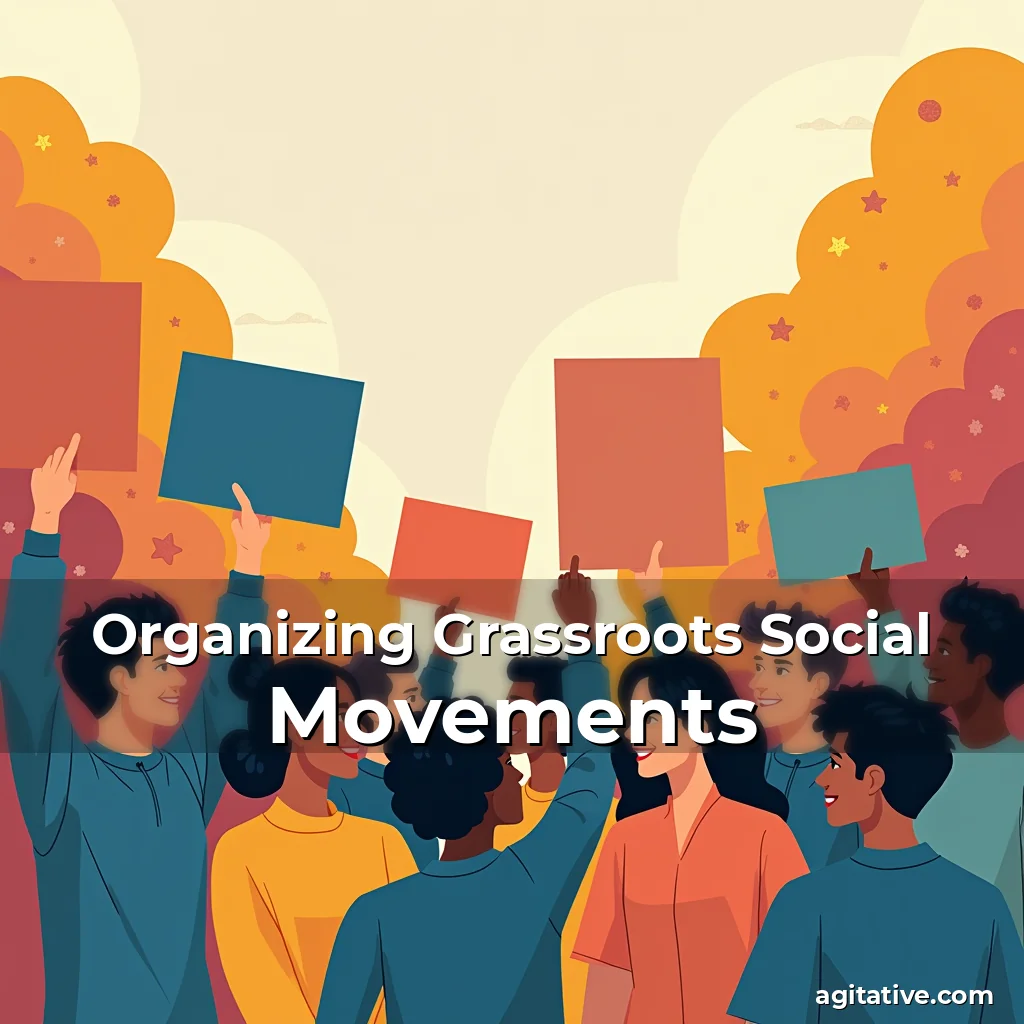
Organizing Grassroots Social Movements
Social movements have long been the catalysts for transformative societal shifts, uniting individuals around shared goals that challenge existing power structures. From the civil rights marches of the 1960s to today’s climate justice campaigns, these movements rely on collective action and strategic organization to drive meaningful change.
The foundation of any successful movement lies in its ability to mobilize people through clear objectives, inclusive leadership, and effective communication strategies. Understanding how grassroots initiatives evolve from local efforts to national phenomena is essential for activists seeking lasting impact.
The Power of Collective Action
Collective action is at the heart of every significant social movement, transforming isolated frustrations into unified demands for change. When individuals come together around common issues—whether environmental degradation, racial injustice, or economic inequality—they amplify their voices and increase pressure on decision-makers.
This unity creates a powerful dynamic where small actions can lead to massive outcomes. For example, mass protests against police brutality have historically led to legislative reforms and cultural paradigm shifts within institutions.
Movement strength grows exponentially when participants share resources, skills, and networks. This interconnectedness allows for greater adaptability, as different groups contribute specialized knowledge to achieve broader aims.
However, maintaining momentum requires continuous engagement and innovative tactics. Whether through digital platforms or community gatherings, sustaining energy among diverse members remains a critical challenge for organizers.
- Diverse participation: Inclusion of varied perspectives strengthens legitimacy and broadens support bases.
- Cohesive messaging: Clear, consistent narratives help maintain focus during complex political landscapes.
Building Effective Leadership Structures
Strong leadership structures are crucial for guiding social movements toward their objectives while ensuring inclusivity and accountability. Unlike hierarchical organizations, many modern movements adopt decentralized models that empower local chapters and individual contributors.
These decentralized frameworks encourage innovation by allowing regional leaders to tailor approaches based on specific needs without losing sight of overarching mission statements. This flexibility often leads to faster response times during crises or policy changes.
While some movements benefit from centralized coordination—such as during large-scale demonstrations—it’s vital to balance structure with organic growth patterns typical of grassroots initiatives.
Leaders must also navigate internal conflicts gracefully, recognizing that differences in opinion can be assets rather than obstacles when managed constructively.
Case Study: Decentralized Coordination in Modern Activism
A recent global campaign focused on climate justice demonstrated how decentralized models can effectively coordinate international efforts. Local chapters handled outreach, logistics, and public education, while central hubs facilitated resource sharing and strategic alignment across regions.
Data analysis revealed that communities using localized leadership experienced higher volunteer retention rates compared to those relying solely on top-down directives. This suggests that empowering front-line workers enhances both motivation and operational efficiency.
Fostering Community Engagement Through Inclusive Practices
Inclusive practices ensure that marginalized voices aren’t sidelined in favor of dominant narratives within social movements. By actively seeking input from underrepresented groups, organizers create spaces where everyone feels heard and valued.
Strategies such as multilingual materials, accessible meeting formats, and representation in leadership roles significantly enhance inclusivity. These measures prevent movements from becoming echo chambers for privileged opinions only.
Culturally responsive engagement techniques include understanding historical contexts relevant to participating communities. This awareness helps avoid unintentional harm caused by well-intentioned but misinformed actions.
Moreover, building trust requires long-term commitment beyond single-issue campaigns. Sustained relationships foster deeper investment from community members who see themselves reflected positively within movement activities.
Leveraging Technology for Movement Growth
Tech tools now play an integral role in organizing social movements, enabling rapid dissemination of information and real-time collaboration between geographically dispersed supporters. Digital platforms allow for instant updates regarding events, fundraising opportunities, and emerging threats related to advocacy causes.
Social media algorithms have reshaped traditional methods of outreach, making targeted advertising possible alongside organic virality generated by passionate advocates sharing personal stories online.
However, reliance on technology introduces new vulnerabilities such as misinformation spread via unverified sources or government surveillance targeting activist networks. Safeguarding data privacy becomes increasingly important amid growing concerns over digital security.
Despite these challenges, integrating tech responsibly offers unprecedented advantages—including democratized access to educational resources previously limited by socioeconomic barriers.
Crafting Compelling Narratives That Resonate
A compelling narrative serves as glue holding disparate elements of a movement together, providing direction and emotional resonance necessary for sustained participation. Stories rooted in lived experiences often prove most persuasive because they reflect authentic struggles faced by real people affected by systemic issues.
Narrative development involves identifying core values that align with both immediate demands and longer-term visions for society. Crafting messages that resonate emotionally while remaining grounded in factual evidence ensures credibility among target audiences.
Educational components embedded within storytelling reinforce key principles behind each cause being advocated for. This dual approach informs participants while simultaneously inspiring them towards continued involvement.
Beyond verbal communication, visual symbols—like flags, slogans, or art pieces—can encapsulate entire ideologies succinctly. Careful selection of imagery reinforces brand identity without alienating potential allies unfamiliar with niche terminology associated with particular movements.
Establishing Sustainable Funding Models
Securing reliable funding streams enables movements to sustain operations without compromising independence or integrity. Diversified revenue sources reduce dependence on corporate sponsors whose interests may conflict with grassroots ideals.
Traditional fundraising includes crowdfunding campaigns, membership dues, grants from progressive foundations, and direct donations from supporters aligned with movement goals. Innovative approaches might involve ethical partnerships with businesses committed to social responsibility initiatives matching organizational missions.
Transparency in financial management builds trust with donors and beneficiaries alike. Regular audits combined with open reporting mechanisms demonstrate fiscal prudence while reinforcing institutional accountability standards expected from non-profits operating within legal frameworks governing charitable entities.
Additionally, investing profits back into community programs rather than excessive administrative expenses maximizes impact per dollar spent—an especially pertinent consideration given limited budgets typically available to independent activist groups working outside formal employment sectors.
Overcoming Challenges Through Strategic Planning
No matter how well-conceived, all social movements encounter setbacks ranging from internal disagreements to external opposition forces intent on derailing progress. Developing contingency plans prepares organizers to respond swiftly yet thoughtfully whenever unexpected situations arise.
Conflict resolution protocols establish procedures for addressing disputes fairly before tensions escalate beyond repair. Mediation teams trained specifically in deescalation techniques offer impartial guidance aimed at preserving cohesion among divergent factions within larger coalitions.
Public relations strategies anticipate backlash from adversaries attempting to discredit legitimate grievances raised by constituents impacted negatively due to unjust policies or practices perpetuated by entrenched powers benefiting from status quo maintenance.
Predictive analytics applied strategically assist in forecasting probable resistance points ahead of major legislative votes or high-profile court cases influencing future trajectories of ongoing campaigns fighting against oppressive systems still prevalent globally despite decades worth of previous reform efforts directed similarly toward same ends.
Measuring Impact and Adapting Strategies
Evaluating success metrics objectively informs decisions regarding whether current methodologies remain viable or require modification based upon evolving circumstances affecting both participant demographics and prevailing socio-political climates shaping public perception surrounding various causes championed internationally by dedicated advocates striving tirelessly everyday towards achieving equitable societies free from discrimination or exploitation wherever possible.
Data collection methods vary depending on movement scope; smaller neighborhood-level projects might prioritize qualitative feedback gathered informally through conversations held regularly with engaged citizens whereas nationwide operations could employ quantitative surveys distributed digitally reaching wider audiences efficiently across multiple time zones simultaneously.
Adaptation doesn’t imply abandoning original missions but refining implementation tactics so that initial intentions translate more effectively into tangible results measurable through agreed-upon benchmarks established collaboratively by stakeholders invested deeply enough personally to care passionately about outcomes realized after years potentially devoted fully toward realizing aspirations once considered impossible attainable only through sheer determination fueled primarily by hope combined intelligently planned execution supported consistently adequate resources allocated properly according to priorities determined democratically amongst ranks comprising actual volunteers doing hands-on work rather than distant overseers detached physically emotionally intellectually from daily grind faced constantly by frontline fighters risking safety comfort convenience repeatedly simply because believe profoundly strongly firmly in necessity existence rightness fight itself regardless consequences endured along way there.
Conclusion
Grassroots social movements thrive on the synergy created between informed activism and strategic organization. Their evolution reflects our collective capacity to envision better worlds and take concrete steps toward manifesting those visions.
By embracing inclusive leadership, leveraging technology wisely, crafting resonant narratives, securing sustainable finances, overcoming inevitable hurdles proactively, measuring impacts accurately, then adapting accordingly continuously—activists lay groundwork required fostering enduring change capable outlasting transient fads lacking substance depth durability found commonly circulating superficially appealing yet ultimately ineffective gestures incapable producing substantive transformation desired earnestly pursued diligently by millions worldwide united purposeful pursuit justice equity fairness dignity respect humanity universally deserved inherently possessed naturally belonging absolutely everywhere always forevermore.


news is a contributor at Agitative. We are committed to providing well-researched, accurate, and valuable content to our readers.
You May Also Like


Identifying Potential Societal Change Catalysts
Identifying Potential Societal Change Catalysts In an era defined by rapid technological advancement and shifting cultural landscapes, identifying societal change...

Creating Emotional Engagement on Social Media
Igniting Change Through Heartfelt Connection: Mastering Emotional Engagement in Activism In an era defined by rapid information overload and digital...
Mastering Activism Trends for Better Results
Revolution in Motion: The Evolving Landscape of Modern Activism The world of activism is undergoing a seismic shift, driven by...

Stirring Debates That Lead to Action
Stirring Debates That Lead to Action In an age where information travels faster than ever before, stirring debates have become...