


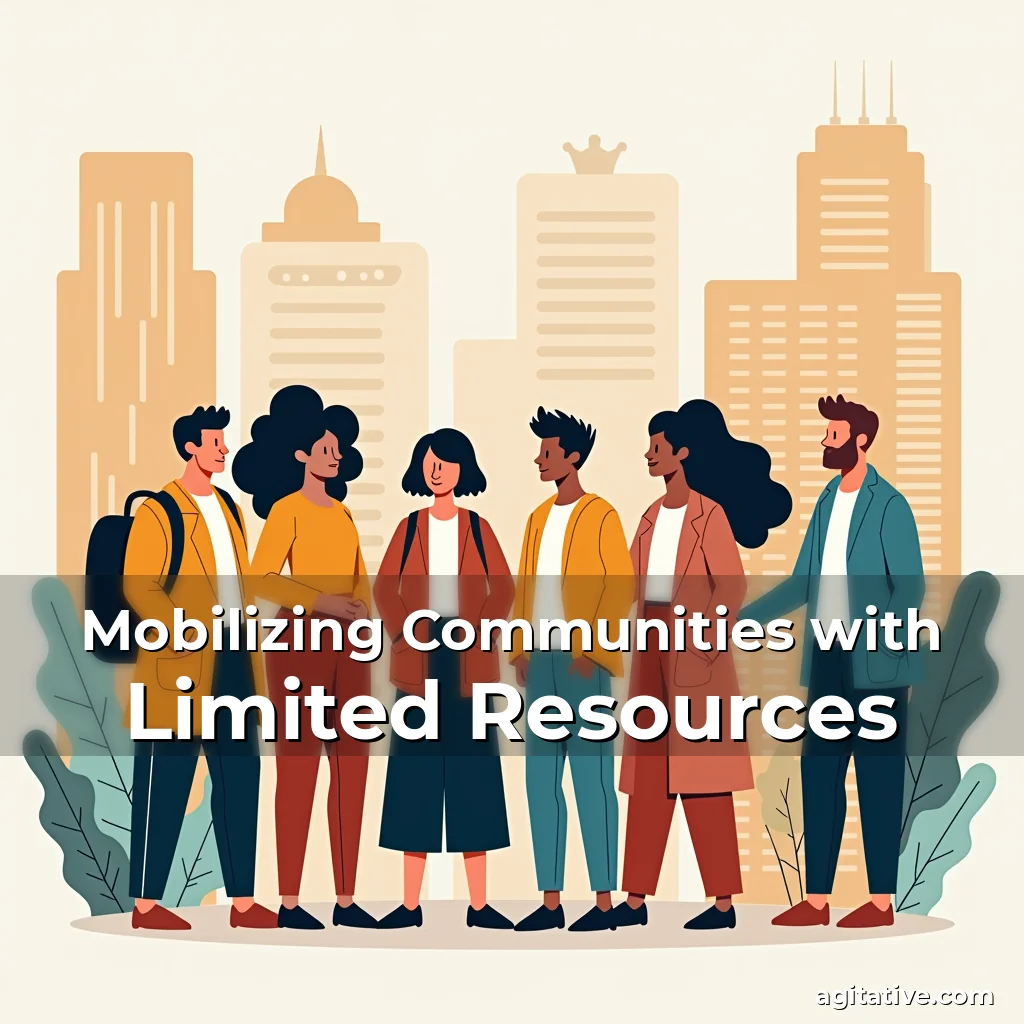
Mobilizing Communities with Limited Resources
In an era defined by inequality and urgent global challenges, the ability to mobilize communities remains a cornerstone of meaningful social change. Activists and organizers often face constraints—be they financial, logistical, or political—but these barriers are not insurmountable.
Effective community mobilization begins with understanding the unique dynamics of local populations, their aspirations, and the systemic issues they confront. This guide explores practical strategies to harness limited resources for powerful, sustainable movement-building.
The Power of Trust-Building in Community Mobilization
Trust is the bedrock of any successful community effort. Without it, even the most well-intentioned initiatives risk being ignored or met with skepticism. Establishing credibility starts with consistent, transparent communication.
Local leaders who have long-standing relationships with residents serve as vital bridges between activists and the people they aim to empower. Their endorsement can transform passive observers into engaged participants.
- Active Listening: Regular town halls and feedback loops allow organizers to understand community concerns before proposing solutions.
- Cultural Sensitivity: Respecting traditions and values prevents alienation and fosters deeper connections.
Building trust takes time, but its dividends are immense. A single trusted figure can amplify messages across networks far beyond formal outreach channels.
When trust exists, marginalized voices gain platform, creating ripple effects that challenge entrenched systems of oppression.
Strategic Planning for Resource-Limited Movements
With scarce resources, precision becomes essential. Every action must align with overarching goals while maximizing available assets—from human capital to digital tools.
A SWOT analysis (Strengths, Weaknesses, Opportunities, Threats) helps identify gaps and leverage points. Mapping existing community structures reveals untapped potential for collaboration.
Leveraging Local Assets
Communities often possess hidden strengths: skilled volunteers, informal support networks, or unused physical spaces. Identifying these resources reduces reliance on external funding.
For example, a neighborhood bakery might host weekly meetings during off-hours, turning a commercial space into a hub for organizing.
Mapping skills and interests among participants ensures tasks are distributed equitably and efficiently, preventing burnout and fostering ownership.
Harnessing Technology for Scalable Impact
Digital tools offer unprecedented opportunities to reach wider audiences at minimal cost. Social media platforms, messaging apps, and online collaboration software enable real-time coordination.
Create centralized hubs—like WhatsApp groups or Google Docs—to streamline information sharing and task management. These platforms democratize access to critical updates and reduce dependency on traditional hierarchies.
- Viral Storytelling: Short videos and infographics simplify complex issues, making them shareable and relatable.
- Data Collection: Online surveys and interactive maps gather real-time insights to inform decisions and track progress.
Beware of digital divides; always provide offline alternatives for those lacking internet access. Combining online and physical methods ensures inclusivity.
Technology alone cannot replace human connection, but when used thoughtfully, it amplifies grassroots energy exponentially.
The Art of Storytelling in Movement Building
Stories resonate deeply because they connect emotions, experiences, and universal truths. Crafting compelling narratives turns abstract causes into personal journeys that inspire action.
Focused storytelling highlights individual triumphs over adversity. A mother fighting for clean water, a student protesting educational inequities—all become symbols of broader struggles.
Use multimedia formats: audio recordings of interviews, photo essays, or even street theater performances bring stories to life in immersive ways.
Ensure stories reflect diverse perspectives within the community, avoiding monolithic portrayals that may exclude certain groups.
Collaborative Partnerships Beyond Traditional Boundaries
No single group holds all answers. Strategic alliances with schools, religious institutions, businesses, and other nonprofits multiply influence and broaden skill sets.
Identify shared values rather than focusing solely on common goals. Even organizations with different missions can find overlapping areas of interest.
- Co-Creation: Involve partners early in planning stages to build mutual investment and avoid tokenism.
- Resource Swapping: Exchange services instead of monetary transactions—for instance, legal aid for marketing expertise.
Document partnerships formally through memoranda of understanding to clarify expectations and prevent misunderstandings down the line.
These collaborations also open doors to new audiences and funding streams previously inaccessible to isolated campaigns.
Measuring Impact Through Qualitative Metrics
While quantitative measures like attendance numbers are useful, qualitative assessments reveal nuanced shifts in consciousness and behavior.
Conduct periodic interviews or focus groups to gauge changes in attitudes toward social justice issues. Ask open-ended questions about perceived empowerment and agency.
Analyze how participation levels correlate with increased civic engagement, such as voter registration drives or policy advocacy efforts.
Track micro-level successes too—the number of first-time speakers at events, or how many individuals begin mentoring others.
Sustaining Momentum Amidst Burnout Risks
Prolonged activism risks exhausting even the most committed members. Proactive measures to prevent burnout protect both individuals and organizational health.
Implement rotating leadership roles so no single person bears excessive responsibility. Celebrate small victories regularly to maintain morale.
Offer mental health resources and flexible participation options. Recognize that not everyone has capacity to commit full-time.
Build contingency plans for unexpected setbacks, ensuring continuity despite personnel changes or external disruptions.
Legal and Ethical Considerations in Community Organizing
Understanding relevant laws protects both organizers and participants from unintended consequences. Research local regulations regarding public assembly, fundraising, and data privacy.
Obtain informed consent when collecting personal information. Be transparent about how data will be stored and used.
Develop codes of conduct addressing respectful dialogue, confidentiality obligations, and conflict resolution procedures.
Consult legal experts when navigating complex scenarios involving protests, petitions, or coalition agreements.
Scaling Success While Maintaining Authenticity
As movements grow, preserving core principles becomes crucial. Expansion shouldn’t dilute original mission or alienate founding members.
Adopt phased growth models that prioritize quality over quantity. Train new recruits thoroughly before delegating significant responsibilities.
Regularly revisit foundational documents to ensure evolving practices remain aligned with initial objectives.
Balance innovation with tradition—introduce new tactics while honoring established customs that foster belonging.
Conclusion
Mobilizing communities effectively demands creativity, resilience, and unwavering commitment to equity. By leveraging available resources strategically and nurturing authentic relationships, activists can ignite transformative change.
Remember: true power lies not in grand gestures but in sustained, everyday acts of solidarity. Build on what already exists, listen intently, and act boldly—with humility and hope for a better future.


news is a contributor at Agitative. We are committed to providing well-researched, accurate, and valuable content to our readers.
You May Also Like

Measuring Social Movements Impact
Quantifying the Ripple Effect: How Social Movements Shape Societies The power of collective action has always been a driving force...

How emotional intelligence shapes your financial future
In this article, we will explore the connection between emotional intelligence and financial literacy, and how developing emotional intelligence can...

Ethical Considerations When Inciting Change
Ethical Considerations When Inciting Change The act of inciting change has always been central to human progress, yet it carries...

Online Activism Trends and Effectiveness
Digital Disruption: How Online Movements Are Reshaping Modern Activism The landscape of modern activism is undergoing rapid transformation driven by...