


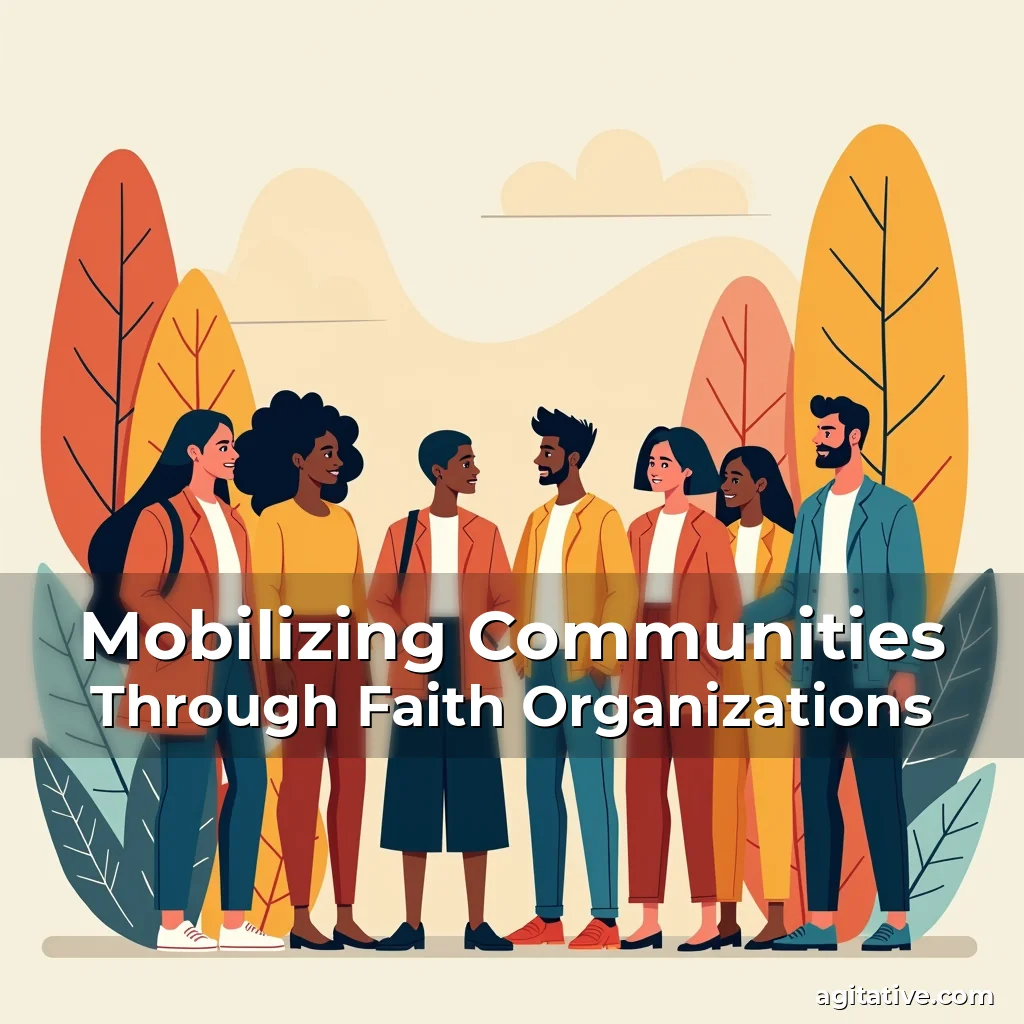
Mobilizing Communities Through Faith Organizations
In today’s rapidly evolving world, the power of collective action remains unparalleled. From grassroots campaigns to global movements, communities have consistently driven transformative change through unity and shared purpose. Yet, among the many forces shaping societal progress, faith-based organizations stand out as uniquely positioned catalysts for mobilization.
Faith groups possess deep-rooted connections within local populations, often serving as trusted hubs for dialogue, support, and leadership development. This dual role—both spiritual guide and activist force—makes them indispensable allies in advancing social justice causes and fostering civic engagement across diverse demographics.
The Role of Faith-Based Organizations in Social Movements
Historically, religious institutions have played pivotal roles in championing human rights and equity initiatives. Whether advocating for racial justice during the Civil Rights Movement or leading climate resilience efforts globally, faith leaders have consistently demonstrated moral authority and organizational capacity to drive meaningful change.
These organizations leverage their existing networks to amplify messages, organize events, and provide practical resources to activists. Their ability to bridge cultural divides while maintaining ethical integrity makes them powerful partners in uniting disparate voices toward common goals.
- Ethical Leadership: Religious figures often serve as moral compasses, grounding advocacy work in principles of compassion, justice, and solidarity.
- Community Trust: Long-standing relationships between congregations and members foster high levels of participation and commitment to cause-related activities.
Cultivating Inclusive Spaces for Collective Action
Creating effective movement ecosystems requires intentional design. Faith-based platforms must actively seek diversity in both membership composition and programming approaches to reflect broader societal realities.
This inclusivity extends beyond demographic representation to encompass accessibility considerations—ensuring physical locations accommodate individuals with disabilities, digital outreach reaches younger generations, and language barriers do not hinder participation.
Bridging Generational Divides Within Congregations
Average church attendance rates reveal significant generational gaps, with youth comprising less than 20% of weekly attendees at most traditional denominations. Addressing this disparity demands innovative strategies that engage new cohorts while respecting intergenerational dynamics.
Social media campaigns led by young clergy members, mentorship programs pairing elders with novices, and tech-savvy service projects offer promising pathways to unify different age groups around shared objectives. These approaches help preserve institutional continuity even as external environments evolve rapidly.
Leveraging Institutional Assets for Advocacy Work
Religious institutions bring unique assets to community mobilization efforts—including physical infrastructure, established communication channels, and built-in volunteer bases. Churches, mosques, temples, and synagogues routinely host thousands of gatherings annually, providing ready venues for meetings, workshops, and demonstrations.
Additionally, their formal structures enable efficient coordination of large-scale actions such as voter registration drives, food distribution programs, or disaster relief operations. Clergy members’ public speaking roles further enhance visibility for critical issues facing marginalized communities.
- Resource Sharing: Congregations frequently pool financial contributions for communal good, enabling sustained funding for long-term initiatives.
- Interfaith Collaboration: Ecumenical partnerships allow cross-denominational coalitions to tackle complex problems requiring unified frontlines.
Developing Strategic Communication Frameworks
Effective message dissemination remains central to successful mobilization. Faith leaders must master storytelling techniques that resonate emotionally while conveying factual information clearly and compellingly.
Combining scripture references with real-world applications helps contextualize abstract policy debates within familiar frameworks. Visual aids like infographics paired with sermons increase comprehension levels significantly among varied literacy audiences.
Tailoring Messaging Across Cultural Contexts
Different faith traditions interpret core values through distinct lenses. While Christianity emphasizes love thy neighbor, Buddhism focuses on interconnectedness, and Islam teaches justice as divine obligation—all require nuanced framing when addressing contemporary issues.
Cross-cultural sensitivity ensures messaging doesn’t inadvertently alienate segments of the population. Training sessions equipping staff with cultural competency skills become essential components of modern faith-based organizing models.
Building Sustainable Volunteer Ecosystems
Lasting impact depends on cultivating enduring participation rather than relying solely on episodic involvement. Structured training programs teach volunteers essential skills ranging from conflict mediation to data collection methods.
Recognizing and rewarding contributions through certificates, public acknowledgments, or small incentives fosters motivation and retention. Mentorship circles connecting experienced advocates with newcomers
As societal landscapes shift constantly, preparing next-generation champions becomes imperative. Comprehensive training programs equip emerging leaders with analytical skills necessary to assess situations objectively and respond effectively.
Emphasis should be placed on emotional intelligence development alongside technical knowledge acquisition. Understanding group psychology enables better management of tensions arising during contentious discussions.
Cultivating Adaptive Thinking Skills
Scenario planning exercises simulate potential future crises, helping trainees think critically about contingency plans. Exposure to international perspectives broadens horizons, fostering creative problem-solving abilities.
Peer-to-peer learning exchanges connect mentors with mentees across regions, facilitating knowledge sharing that transcends individual experiences limitations. Such collaborations enrich collective wisdom available to address novel challenges innovatively.
Conclusion
Mobilizing communities through faith organizations represents a dynamic intersection of spirituality and social responsibility. When approached thoughtfully, these partnerships unlock unprecedented potential for positive transformation at both local and global scales.
To harness this power fully, stakeholders must commit themselves continuously to learning, adapting, and growing together. With dedicated effort towards inclusive engagement, strategic innovation, and ethical conduct, faith-inspired movements will continue shaping tomorrow’s progressive landscape profoundly.


news is a contributor at Agitative. We are committed to providing well-researched, accurate, and valuable content to our readers.
You May Also Like

Modern Agitation Techniques for Youth Activists
Modern Agitation Techniques for Youth Activists In an era defined by rapid digital transformation and growing global awareness, agitation has...
Historical Societal Change Catalysts Examined
Historical Societal Change Catalysts Examined The forces that drive societal transformation are as complex as they are profound. From revolutions...
Measuring Social Movements Impact
Quantifying the Ripple Effect: How Social Movements Shape Societies The power of collective action has always been a driving force...

Corporate Activism Trends in Business
The Rise of Digital Resistance: Modern Activism Trends Shaping Social Change In an era defined by rapid technological advancements and...