


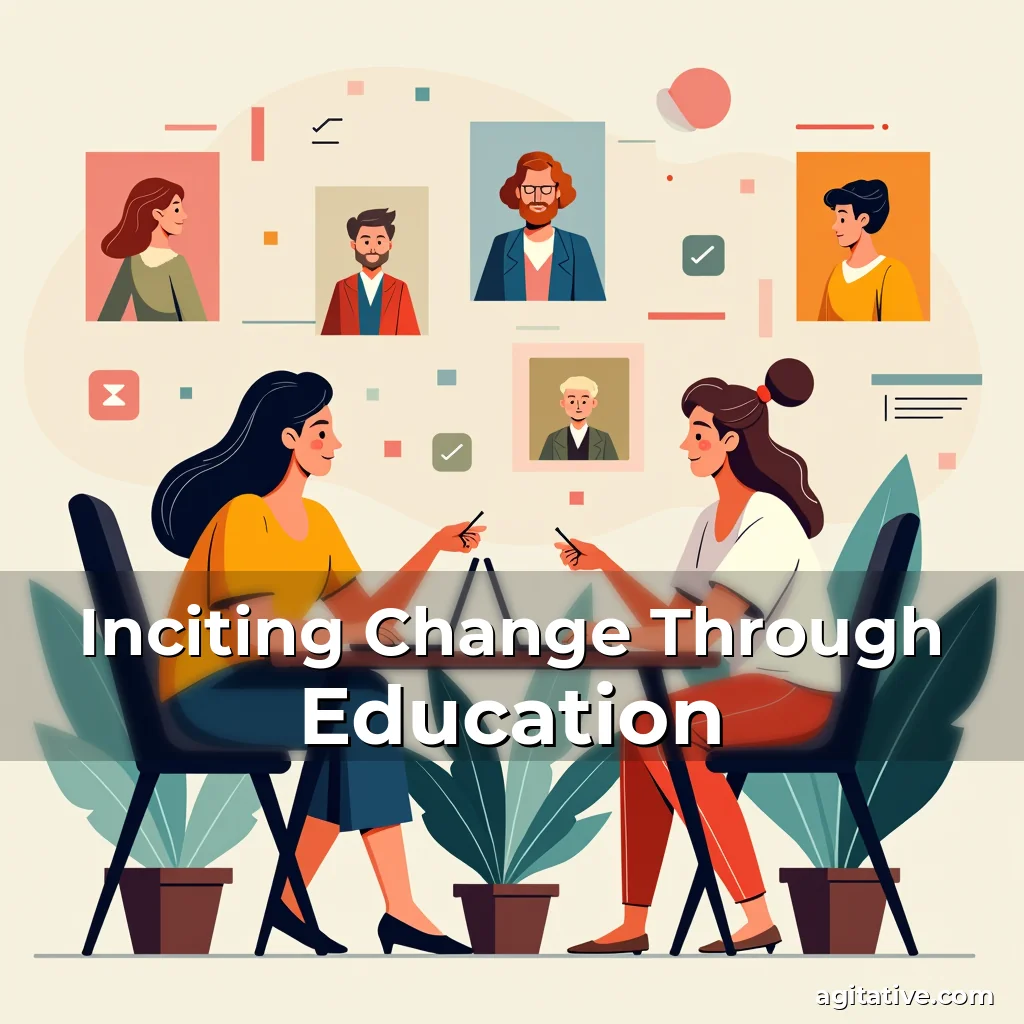
Inciting Change Through Education
In a world increasingly defined by inequality, environmental crises, and political polarization, the power of education has never been clearer. It is not merely a tool for personal advancement but a catalyst for collective transformation, capable of reshaping societies and challenging entrenched systems.
The essence of inciting change lies in empowering individuals with knowledge, critical thinking skills, and the courage to act. When people understand the root causes of injustice and oppression, they become agents of progress rather than passive observers.
The Historical Foundations of Educational Activism
Educational activism is not a new phenomenon; its roots stretch back centuries. From ancient philosophers who questioned societal norms to modern educators who challenge oppressive regimes, learning has always been intertwined with resistance.
During the abolitionist movement in the United States, literacy programs were vital tools in dismantling slavery. Educating enslaved people was seen as dangerous because it could ignite revolutionary ideas and empower marginalized communities.
Similarly, during the Indian independence struggle, leaders like Mahatma Gandhi emphasized basic education as a means to liberate minds and bodies from colonial rule. This approach highlighted how education can serve dual purposes: personal development and national liberation.
- Education as Liberation: Many civil rights movements have recognized that access to quality education is fundamental to achieving freedom and equality. In South Africa, post-apartheid reforms prioritized educational equity as a cornerstone of reconciliation and nation-building.
- Critical Pedagogy: Paulo Freire, a Brazilian educator, pioneered the concept of “critical pedagogy,” which encourages learners to question dominant ideologies instead of passively accepting them. His work laid the groundwork for contemporary approaches to transformative teaching.
Making Knowledge Accessible: Breaking Down Barriers
Beyond theoretical discussions, practical efforts to democratize education remain central to fostering widespread change. Historically, systemic barriers such as poverty, discrimination, and geographic isolation have limited access to quality schooling worldwide.
Todays’ digital revolution presents unprecedented opportunities to dismantle these barriers. Online platforms offer free courses on subjects ranging from climate science to human rights, enabling millions to acquire skills previously restricted to elite institutions.
Global Initiatives Redefining Learning
Programs like Khan Academy and Coursera have transformed lifelong learning by providing accessible resources regardless of location or socioeconomic background. These initiatives demonstrate that technology can level the playing field when used creatively.
Moreover, grassroots organizations often play pivotal roles in expanding educational reach. For instance, community-based libraries in underserved areas frequently host workshops focused on civic engagement and voter registration—an intersection between education and direct action.
Empowering Youth Through Curricula Reform
Youth represent both the future and present of societal change. However, traditional curricula often fail to reflect diverse histories and perspectives, leaving many students feeling disconnected from mainstream narratives.
Curriculum reform advocates argue that integrating marginalized voices—including indigenous cultures, women’s contributions, and LGBTQ+ experiences—is essential for creating inclusive classrooms. Such changes foster empathy and understanding among students.
- Inclusive Storytelling: Incorporating non-Western literature and local history into school syllabi helps students see themselves reflected in academic materials, promoting self-worth and motivation to engage actively with society.
- Service-Learning Projects: Schools implementing service-learning components allow students to apply classroom lessons real-world contexts, reinforcing values like social responsibility and ethical decision-making.
Media Literacy: A Weapon Against Misinformation
In today’s information age, distinguishing fact from fiction has become crucial. Media literacy education equips citizens with the ability to critically evaluate sources, identify biases, and recognize misinformation tactics employed across various media channels.
This skill set becomes particularly vital during times of crisis, whether public health emergencies or geopolitical tensions. Being able to discern reliable news sources protects individuals from manipulation and promotes informed participation in democratic processes.
Fostering Critical Thinking Skills
Schools incorporating media analysis units teach students how propaganda techniques function—from emotional appeals to cherry-picking data. Understanding these mechanisms builds resilience against disinformation campaigns.
Furthermore, encouraging open dialogues about current events allows students to practice respectful debate while honing analytical abilities. Such practices cultivate a generation better prepared to navigate complex global issues.
Community Engagement: Bridging Theory and Practice
While formal education plays a foundational role, community-led initiatives equally contribute to inciting change. Local groups often develop innovative solutions tailored specifically to regional needs, bypassing bureaucratic hurdles associated with institutional frameworks.
These bottom-up approaches
Conversely, unchecked reliance on technology poses dangers such as reduced face-to-face interaction and increased screen time potentially harming mental well-being. Balancing digital integration with interpersonal connectivity remains paramount.
- Artificial Intelligence Integration: AI-driven tutoring systems adapt dynamically to individual learner styles, offering customized feedback that enhances comprehension levels significantly compared to standardized instruction models.
- Data Privacy Concerns: As edtech expands rapidly, protecting student data privacy emerges as urgent priority requiring robust legal safeguards against misuse by corporations or authorities.
Building Coalitions Across Generations and Borders
Sustainable change necessitates unity spanning generational divides and geographical boundaries. Young activists bring fresh energy and novel ideas, whereas experienced campaigners offer strategic insight gained over decades of struggle.
Cross-generational collaboration creates fertile ground for developing holistic approaches addressing multifaceted problems like climate change or racial injustice. Combining youthful idealism with seasoned pragmatism yields powerful synergies capable of shifting tectonic plates within established structures.
- Interdisciplinary Approaches: Integrating fields such as economics, sociology, psychology, and environmental studies enables nuanced analyses required to tackle interconnected global challenges effectively.
- Transnational Networks: Global alliances facilitate resource sharing, joint advocacy campaigns, and cross-cultural exchanges enriching everyone involved irrespective of origin.
Conclusion
Education stands at the forefront of inciting meaningful change, acting simultaneously as a mirror reflecting our realities and a hammer shaping tomorrow’s possibilities. Its capacity to transform lives hinges on commitment to inclusivity, innovation, and integrity.
To participate actively in this ongoing journey requires embracing continuous learning itself—not solely acquiring knowledge but cultivating curiosity, humility, and willingness to evolve constantly alongside ever-changing circumstances surrounding us.


news is a contributor at Agitative. We are committed to providing well-researched, accurate, and valuable content to our readers.
You May Also Like


The Unseen Engine: Agitational Media as Catalysts for Social Change
The Unseen Engine: Agitational Media as Catalysts for Social Change In an era defined by rapid information exchange, agitational media...


Emotional Triggers for Charitable Giving
Emotional Triggers for Charitable Giving In an age where information is abundant yet empathy often feels scarce, understanding emotional triggers...
Emotional Engagement in Political Campaigns
Igniting Collective Action Through Emotional Resonance in Social Movements In an era defined by polarizing politics and urgent calls for...
History of Successful Social Movements
The Power of Collective Action: A Historical Journey Through Transformative Social Movements Social movements have long been the driving force...