


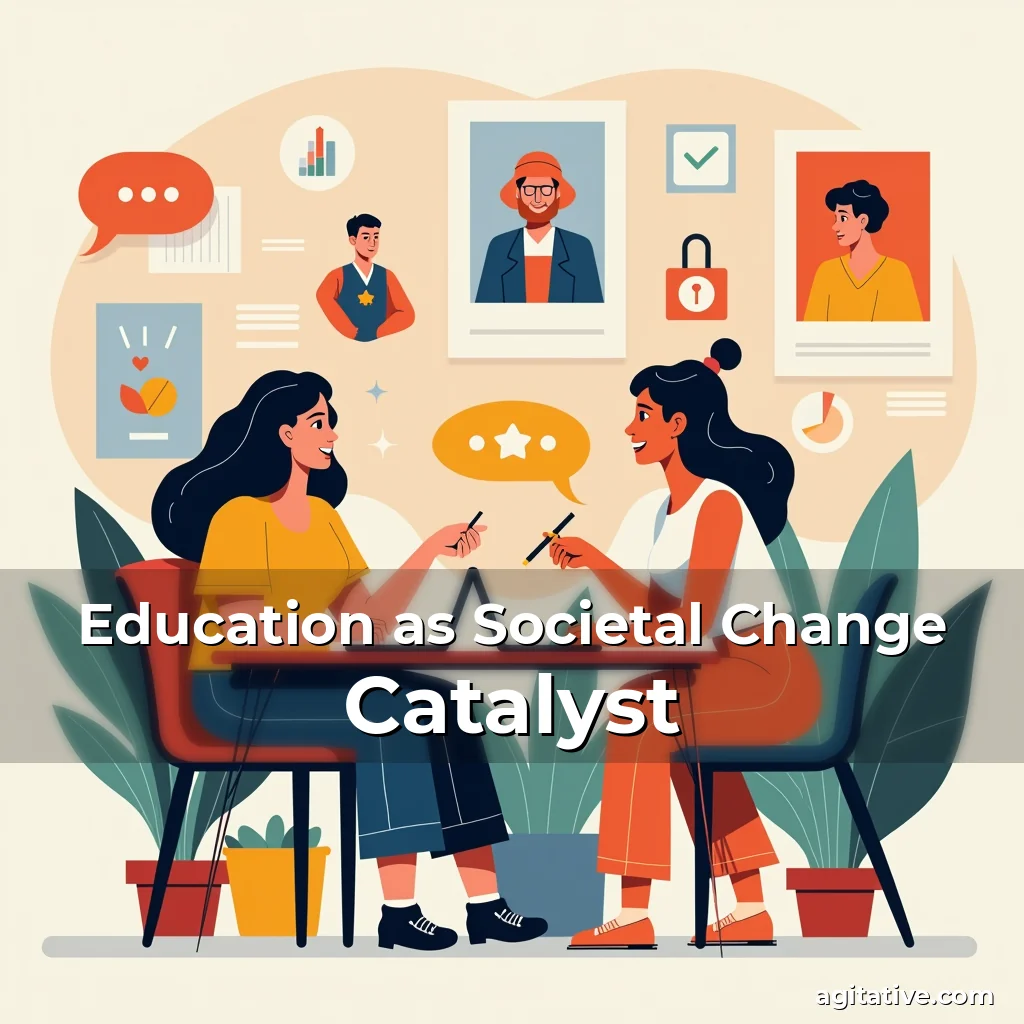
Education as Societal Change Catalyst
Society has always been shaped by forces that disrupt the status quo, but few tools are as powerful as education. It is not merely a means of acquiring knowledge; it is a force capable of dismantling oppressive structures, empowering individuals, and reimagining collective futures.
In an age defined by rapid technological advancement, environmental crises, and deepening inequalities, education stands as both a mirror and a hammer. It reflects the injustices of our time while offering the potential to forge new paths toward justice, equity, and sustainability.
The Historical Roots of Education as a Tool for Transformation
Educational movements have long been intertwined with struggles for freedom and dignity. From ancient philosophical schools to modern classrooms, education has served as a battleground for ideological shifts and societal evolution.
During the Enlightenment, thinkers like John Locke and Jean-Jacques Rousseau championed the idea that reason and critical thought were essential to challenging authoritarian rule. Their theories laid the groundwork for democratic ideals that continue to shape societies today.
The abolitionist movement in the United States provides a compelling example. Educators like Frederick Douglass leveraged literacy to dismantle slavery’s moral and legal foundations, proving that knowledge was a weapon against oppression.
- Education empowered enslaved people: Learning to read and write allowed formerly enslaved individuals to document their experiences, advocate for themselves, and challenge systemic racism.
- Civil rights leaders emphasized schooling: Figures like Martin Luther King Jr. stressed the necessity of education in cultivating informed citizens who could demand equality.
- Educational reform sparked revolutions: In Latin America, the spread of European education during colonial times often clashed with indigenous traditions, leading to cultural resistance and eventual independence movements.
Breaking Barriers: How Access Shapes Social Mobility
Educational access remains one of the most significant determinants of opportunity. Yet, across the globe, millions remain excluded due to poverty, discrimination, or geographic isolation.
When marginalized groups gain entry to quality education, they unlock pathways to economic stability, political participation, and personal agency. This ripple effect transforms entire communities, shifting power dynamics over generations.
Data reveals stark disparities: According to UNESCO, nearly 258 million children and youth worldwide lack basic education. Girls, racial minorities, and rural populations face disproportionate barriers to enrollment and retention.
Economic Impact of Educational Equity
Investing in education yields measurable returns. Studies show that increasing girls’ secondary school attendance reduces child marriage rates by 60% and boosts national GDP growth by up to 1 percentage point annually.
A 2019 report by the World Bank highlighted that countries prioritizing universal primary education saw reductions in income inequality and increased civic engagement among younger demographics.
Modern Challenges: The Digital Divide and Systemic Bias
Today, technology promises democratized access to information—but it also exacerbates existing inequities. Students in underserved areas often lack internet connectivity, devices, or digital literacy skills necessary to thrive in a tech-driven world.
Standardized testing continues to perpetuate biases rooted in socioeconomic privilege. Tests that prioritize rote memorization over creative problem-solving disadvantage students from diverse backgrounds, limiting their prospects for higher education and employment.
Teacher training plays a crucial role: Research indicates that educators trained in culturally responsive pedagogy significantly improve outcomes for minority students, fostering environments where all learners feel valued.
Redefining Success: Beyond Traditional Metrics
The traditional model of education—focused on grades, conformity, and narrow skill sets—is increasingly seen as inadequate for addressing complex global challenges. Activists argue that curricula must evolve to reflect real-world problems and foster holistic development.
Project-based learning, community partnerships, and interdisciplinary courses allow students to engage with pressing issues like climate change, social justice, and mental health. These approaches cultivate empathy, collaboration, and innovation.
Curriculum diversity matters: Incorporating histories, languages, and perspectives from oppressed groups ensures students understand the full spectrum of human experience. For instance, teaching Indigenous knowledge systems alongside Western science offers a richer understanding of ecological stewardship.
Youth as Agents of Change: The Power of Student Movements
Younger generations are reshaping education itself through grassroots campaigns demanding better resources, safer campuses, and inclusive policies. Their energy and idealism serve as reminders that change begins with awareness and action.
Student-led strikes for climate action, such as Greta Thunberg’s Fridays for Future initiative, highlight how education empowers young people to mobilize around urgent issues. These movements pressure governments and institutions to align priorities with intergenerational equity.
Universities as hubs of activism: Institutions like UCLA and Harvard have become breeding grounds for social justice advocates, with student organizations pushing for divestment from fossil fuels, affordable healthcare, and prison abolition.
Glocal Solutions: Tailoring Education to Local Contexts
No singular approach fits all. Effective educational reform requires sensitivity to local cultures, economies, and needs. What works in urban centers may fail in remote villages, and vice versa.
Community-driven programs, such as India’s Sarva Shiksha Abhiyan or Brazil’s Bolsa Família, demonstrate how combining government investment with grassroots input leads to sustainable progress. These models emphasize participation, adaptability, and accountability.
Cultural relevance strengthens engagement: Schools that integrate local dialects, traditions, and values see improved attendance and academic performance. In Kenya, bilingual education programs have boosted math scores by 30%, illustrating the value of contextualized instruction.
Policy Advocacy: The Role of Legislation in Shifting Paradigms
Legislative frameworks determine whether education serves as a tool for liberation or exclusion. Policies that expand funding, protect LGBTQ+ students, or mandate anti-racist curriculum represent steps toward a more just system.
Landmark laws: The Civil Rights Act of 1964 in the U.S., which outlawed segregation in public schools, marked a turning point in the fight for equal educational opportunity. Similar legislation exists in many nations, though enforcement remains uneven.
Advocates now push for policies that address systemic issues like school funding disparities, police presence in classrooms, and mental health support. These measures aim to
The Path Forward: Collective Action and Visionary Leadership
Creating a society where education drives positive transformation demands relentless effort from policymakers, educators, and communities alike. It requires rejecting complacency and embracing the uncomfortable truths about inequity.
Leadership that centers inclusivity, transparency, and compassion will define future progress. By elevating voices traditionally silenced—such as those of disabled individuals, refugees, and non-binary students—we move closer to an equitable vision of education.
Measuring success: True progress cannot be reduced to test scores alone. Instead, we must assess improvements in health outcomes, voter turnout, artistic expression, and cross-cultural understanding—metrics that reflect the broader impact of education.
Conclusion
Education is far more than a pathway to individual achievement; it is the bedrock upon which societies rebuild themselves after periods of strife. When wielded responsibly, it becomes a beacon guiding humanity toward a more just and harmonious existence.
As activists, advocates, and everyday citizens, we hold immense responsibility. Supporting educational equity through donations, volunteering, or policy advocacy isn’t just noble—it’s a prerequisite for creating a world where everyone has the chance to flourish. The next chapter of history depends on it.


news is a contributor at Agitative. We are committed to providing well-researched, accurate, and valuable content to our readers.
You May Also Like

Motivational Content for Mental Health Support
The Power of Motivation in Driving Social Change and Activism In an era defined by rapid transformation and global challenges,...
From Sparks to Supremacy: The Art and Science of Movement Building for Social Change
From Sparks to Supremacy: The Art and Science of Movement Building for Social Change Movement building isn’t just about protests...

Legal Boundaries of Agitational Media
The Legal Boundaries of Agitational Media in Social Change Movements In an era defined by rapid digital transformation and heightened...
Urgent vs Gentle Call to Action Approaches
The Power Dynamics Behind Urgent Calls to Action Urgent calls to action leverage emotional triggers to prompt rapid responses. These...