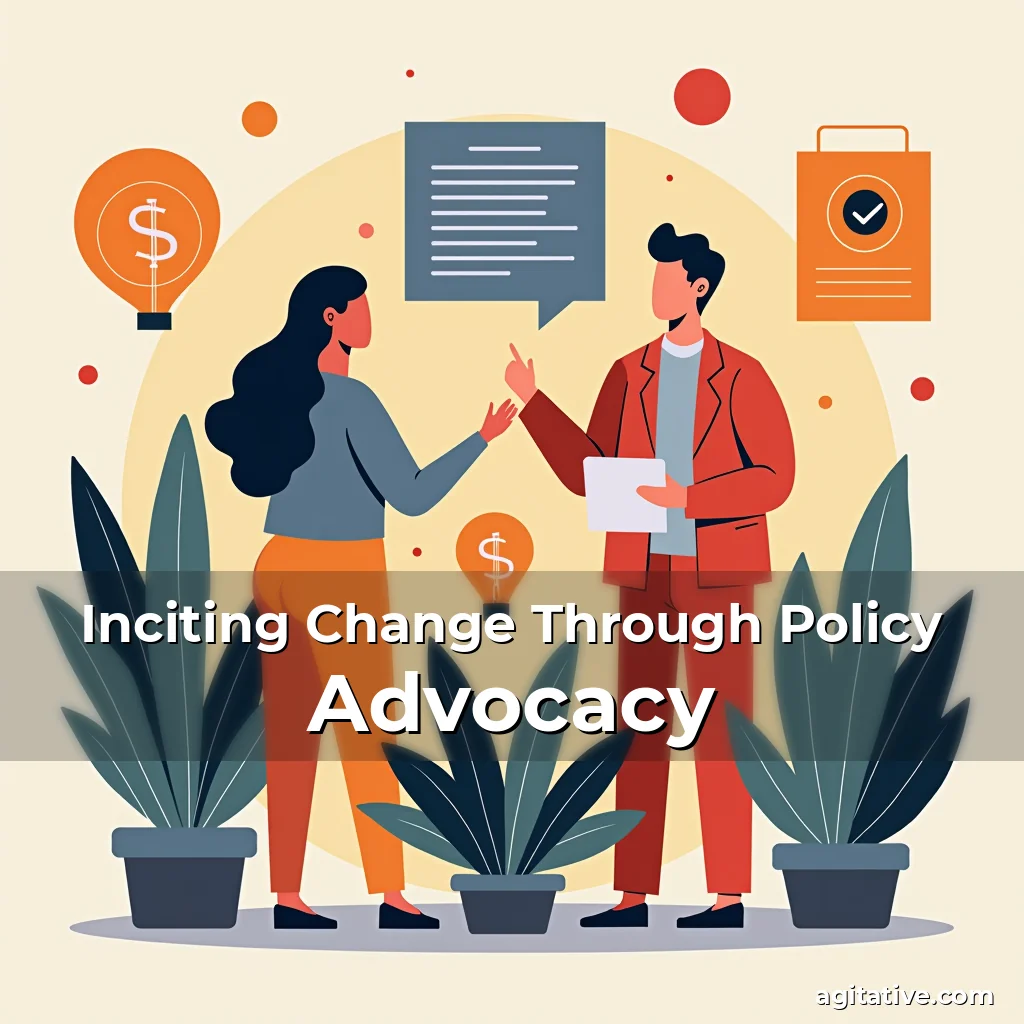
Inciting Change Through Policy Advocacy
In an era where societal challenges demand urgent attention, inciting change through policy advocacy has emerged as a powerful tool for driving progress in areas ranging from environmental sustainability to human rights. This article explores how individuals and organizations can harness the power of policy-making to create meaningful impact within their communities and beyond.
The journey toward transformative policies begins with understanding the complex landscape of political systems and legislative processes that shape our lives daily. By delving deeper into these dynamics, we uncover strategies that empower activists and advocates to influence decision-makers effectively.
The Power of Collective Action
Collective action is at the heart of successful policy advocacy efforts. When diverse groups unite under common goals, they amplify their voices significantly, making it harder for those in power to ignore them.
This unity creates momentum that can shift public opinion and pressure lawmakers to act decisively. It transforms isolated concerns into widespread movements capable of reshaping legislation and cultural norms alike.
Examples of effective collective actions include:
- Marches and rallies: These events draw media coverage and attract attention from both local officials and national leaders who may be swayed by popular sentiment.
- Campaigns through digital platforms: Social media campaigns allow for rapid dissemination of messages across global audiences, enabling real-time engagement and support gathering.
Moreover, coalitions formed between grassroots organizations, non-profits, and even corporate entities can leverage resources and expertise to strengthen advocacy initiatives further.
Such partnerships facilitate access to funding opportunities while also enhancing credibility among stakeholders involved in policymaking circles.
Framing Issues for Effective Policy Change
Framing issues correctly plays a crucial role in shaping public perception and influencing policy outcomes. A well-crafted narrative can transform abstract ideas into tangible solutions that resonate deeply with people’s values and experiences.
To frame issues effectively, advocates must identify key themes that align with existing social narratives without alienating potential allies. This strategic alignment ensures broader acceptance and support when proposing new legislation or reforms.
Consider the following steps when framing your issue:
- Conduct thorough research to understand stakeholder perspectives and interests related to your cause.
- Develop clear messaging that highlights personal stories alongside data-driven arguments to build emotional appeal.
- Use language that resonates emotionally but remains grounded in factual evidence whenever possible.
A compelling story combined with solid evidence often leads to stronger advocacy results than relying solely on either approach alone.
Additionally, identifying champions—individuals or institutions known for supporting similar causes—can provide additional legitimacy to your framed message during discussions with policymakers.
Bridging Gaps Between Activists And Policymakers
Building bridges between passionate activists and pragmatic policymakers requires careful navigation of differing priorities and communication styles. Understanding each party’s motivations helps establish mutually beneficial relationships centered around shared objectives rather than conflict resolution.
Policymakers operate within constrained environments shaped by budget limitations, electoral pressures, and bureaucratic hurdles; acknowledging these realities fosters realistic expectations regarding what can realistically achieve during advocacy efforts.
One essential strategy involves creating dialogue spaces where both sides engage constructively—for instance, through town hall meetings, listening sessions, or formal consultation forums designed specifically for such exchanges.
These dialogues help clarify misconceptions held by either side while simultaneously building trust necessary for long-term collaboration aimed at enacting sustainable changes.
Furthermore, training programs focused on parliamentary procedures or legislative drafting techniques equip activists with practical skills useful in interacting directly with legislators.
Leveraging Media For Broader Impact
The modern landscape offers unprecedented opportunities to leverage various forms of media—from traditional news outlets to emerging technologies—to enhance visibility and reach wider audiences interested in your campaign’s mission.
Media engagement goes beyond mere promotion; it involves crafting narratives tailored to different mediums ensuring consistency yet adaptability depending upon platform specifics like television broadcasts versus online articles.
Strategies for leveraging media effectively:
- Identify journalists specializing in relevant fields who might cover your story based on its significance and relevance today.
- Provide easily digestible information packages including press releases, interview requests, and multimedia assets ready for immediate use.
- Engage influencers whose followers align closely with target demographics helping spread awareness organically through trusted networks.
Digital storytelling tools now enable creative representation of complex topics using visuals, animations, or interactive maps which make learning engaging and memorable experiences particularly appealing younger generations seeking authentic connections over passive consumption models traditionally associated with conventional journalism formats.
By maintaining consistent presence across multiple channels while adapting tone appropriately according to medium requirements, advocates ensure sustained interest and continued support from engaged community members invested personally in achieving desired transformations society-wide.
Data-Driven Approaches In Modern Advocacy Campaigns
Modern advocacy increasingly relies on data analytics to inform decisions, measure effectiveness, and predict future trends affecting targeted populations negatively impacted due to current laws or lack thereof regulating certain sectors critically important towards realizing equitable distribution resources globally.
Utilizing big data allows campaigners to segment audiences accurately based upon behavioral patterns observed previously thereby tailoring communications precisely meeting needs identified through rigorous analysis performed regularly throughout entire duration project lifecycle.
Key applications of data science within contemporary activist frameworks include:
- Trend Analysis:** Identifying shifts in public sentiment concerning particular subjects enables timely interventions addressing emerging concerns before they escalate uncontrollably leading potentially catastrophic consequences if left unaddressed promptly enough.
- Predictive Modeling:** Forecasting likely responses among affected groups against proposed policy amendments facilitates preparation accordingly minimizing surprises encountered later stages implementation phase where adjustments become costly exercise requiring significant resource allocation typically unavailable small-scale operations lacking adequate infrastructural backing required executing sophisticated simulations efficiently.
- Resource Optimization:** Allocating limited funds optimally amongst competing demands becomes feasible via algorithmic approaches prioritizing most impactful activities delivering highest return investments measured objectively rather subjectively assessed qualitatively as usual practice hitherto adopted manually without technological assistance available earlier periods history mankind struggled managing vast quantities information manually consuming considerable amounts time energy effort yielding suboptimal results compared what could achieved had utilized advanced computational methodologies available nowadays seamlessly integrated everyday workflows enhancing productivity dramatically reducing operational overhead considerably.
While initial setup costs associated acquiring requisite datasets pose barriers initially especially startups needing immediate scalability capabilities, long term benefits far outweigh temporary inconveniences experienced transitioning legacy systems newer architectures better suited handling exponential growth expected upcoming years driven relentless expansion internet penetration worldwide coupled increasing adoption smart devices facilitating continuous flow real-time updates essential sustaining dynamic nature modern societies require constant vigilance monitoring evolving conditions swiftly reacting accordingly preventing situations spiraling out control resulting irreversible damages difficult reversing once occurred.
Investments made upfront establishing robust analytical foundations prove invaluable ultimately contributing substantially overall success metrics tracked consistently monitored periodically reassessing performance indicators recalibrating strategies dynamically responding changing landscapes proactively instead reactively.
Educational Initiatives As Catalysts Of Lasting Transformation
Educational initiatives serve not only as means conveying knowledge but also function pivotal roles igniting sparks curiosity inspiring young minds pursue careers dedicated service greater good humanity pursuing noble aspirations transcending self-interests focusing collective welfare promoting inclusive growth benefiting everyone irrespective backgrounds origins identities.
Curriculum development incorporating civic education modules teaching students fundamentals democracy participation responsibilities citizens living within structured societies governed rules regulations established collectively agreed upon representatives elected freely fairly ensuring fair treatment equal protection law applicable universally regardless status position occupied individuals residing jurisdiction defined geographical boundaries recognized internationally.
Integrating educational components within advocacy work includes:
- Scholarship Programs:** Funding scholarships encourages talented youth unable afford higher education pursue studies relating fields critical advancing causes championed by organizations committed fostering leadership qualities necessary steering nations away trajectories stagnation decline towards prosperity peace stability.
- Workshops & Seminars:** Hosting regular workshops provides hands-on experience applying theoretical principles practically empowering participants acquiring transferable skills adaptable varied contexts reinforcing core competencies indispensable navigating complexities modern governance structures inherently multifaceted demanding nuanced understanding intricate interdependencies linking disparate elements together forming cohesive whole functioning harmoniously despite inherent contradictions sometimes arising naturally course normal operations.
- Public Awareness Campaigns:** Launching informative campaigns raise consciousness levels surrounding pressing matters impacting quality life standards prompting introspection reflection encouraging active involvement civic duties fulfilling obligations bestowed upon every individual member society contributing positively shaping future generations inherit world vastly improved thanks conscious efforts undertaken present moment.
Through sustained investment in education, advocates cultivate informed citizenry equipped abilities think critically analyze logically articulate persuasively engage meaningfully debates discussions occurring arenas politics economics culture arts sciences etc., thereby strengthening democratic fabric essential thriving pluralistic societies characterized mutual respect tolerance coexistence peaceful resolutions conflicts arisen inevitably human interactions boundless diversity experiences cultures ideologies intersect continually evolving tapestry existence itself.
As educational institutions partner closely with civil society actors government agencies private sector counterparts pooling resources talents expertise developing innovative pedagogical methods responsive rapidly shifting paradigms demanded continuously adapting curricula reflecting latest developments scientific discoveries technological breakthroughs socioeconomic changes occurring concurrently globalization accelerates interconnectedness between distant regions once considered isolated separate entities now tightly woven network influencing one another reciprocally shaping destinies interdependent fates tied closely threads same fabric.
Measuring Success And Adapting Strategies
Assessing the efficacy of advocacy efforts necessitates defining measurable benchmarks aligned with overarching goals set forth initially outlining parameters indicating achievement milestones reached successfully.
Quantifiable indicators such as number supporters mobilized, legislative bills introduced, media impressions generated, or direct engagements initiated offer concrete evidence demonstrating progress attained thus far validating efforts undertaken confirming worthiness continuing pursuit lofty ambitions envisioned outset endeavors commenced.
Commonly used evaluation criteria encompass:
- Policy Outcomes:** Tracking actual enactment of advocated policies serves as definitive proof of success translating intentions into reality proving influence wielded by persistent advocacy campaigns endured opposition faced along way achieving final victory celebrated triumphantly.
- Community Engagement Levels:** Monitoring increased volunteer sign-ups, event attendance figures, or social media interaction rates reflects heightened interest sparking conversations propelling movement forward gaining traction growing grassroots support base expanding steadily over time.
- Media Coverage Quality:** Evaluating depth of journalistic pieces produced highlighting campaign achievements rather superficial mentions indicates genuine recognition afforded by mainstream outlets suggesting broader acceptance idea embedded within cultural discourse becoming normalized accepted norm rather fringe concern dismissed dismissively unless forced attention unexpectedly.
However, measuring intangible impacts such as raised awareness or shifted attitudes poses greater challenge requiring indirect assessments employing surveys polls focus group interviews capturing subtle nuances behavioral shifts occurring gradually overtime eventually culminating noticeable differences observable empirically verifying hypothesis posited originally.
Adaptation mechanisms should be flexible enough allowing recalibration tactics employed based upon feedback received adjusting emphasis redirecting energies wherever gaps persist ensuring holistic development all facets comprising successful advocacy endeavor embracing iterative process refining approaches progressively moving closer ultimate objective pursued diligently relentlessly until attainment confirmed unequivocally.
Conclusion
In conclusion, inciting change through policy advocacy demands a multifaceted approach combining collective action, strategic framing, media engagement, data utilization, and educational outreach to drive lasting transformation.
Activists must remain vigilant, adaptive, and resilient, recognizing that true change arises not merely from passion but from persistent, informed, and strategically executed efforts aimed at transforming systemic inequities into opportunities for universal benefit.

news is a contributor at Agitative. We are committed to providing well-researched, accurate, and valuable content to our readers.