


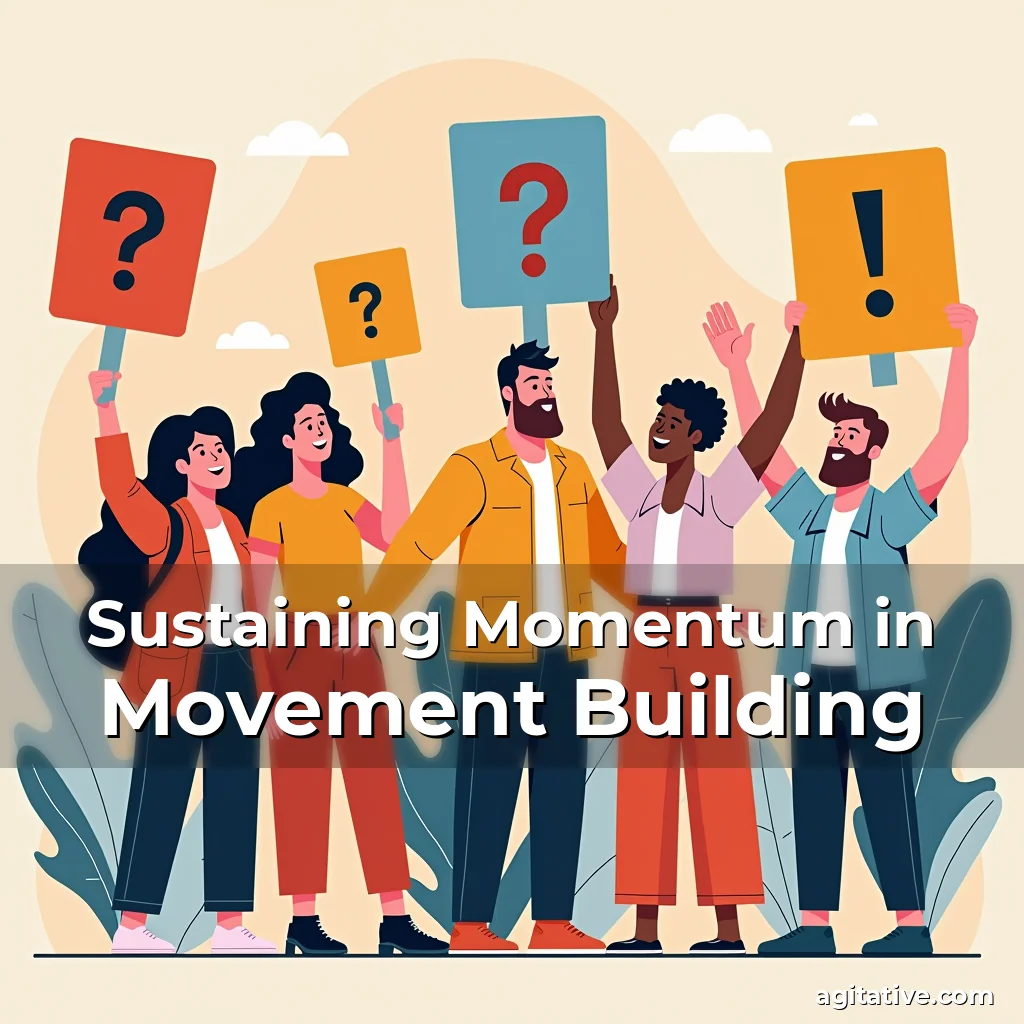
Sustaining Momentum in Movement Building
Movement building is not merely an act of protest; it’s a strategic process of cultivating enduring collective power. It requires more than passionate speeches—it demands intentionality, resilience, and a deep understanding of how movements grow from isolated acts into sustained forces for social change.
In today’s landscape of rapid information cycles and fleeting attention spans, movement builders must find ways to transform transient outrage into lasting impact. This means creating structures that outlast individual campaigns while staying responsive to evolving challenges.
The Foundations of Lasting Change
Movements thrive when they are rooted in shared values rather than singular issues. A campaign focused solely on banning plastic bags may gain traction temporarily, but without connecting to broader environmental justice principles, its influence will be limited.
Consider the civil rights movement of the 1960s. Its success was built upon core beliefs about equality and dignity that transcended any single legislative battle. These foundational values allowed the movement to adapt as new obstacles emerged over time.
- Fostering unity: Movements need to create spaces where diverse voices can coexist without diluting their purpose. Inclusion isn’t optional—it’s essential for long-term sustainability.
- Cultivating leadership: True movement building involves developing leaders at every level, not relying on charismatic figures who might become too central to the cause itself.
Building Organizational Capacity
Strong organizations form the backbone of successful movements. They provide structure, resources, and continuity that make sustained action possible. However, many grassroots efforts fail because they prioritize immediate results over long-term infrastructure development.
Organizations must balance agility with stability. Too much rigidity stifles innovation, while excessive informality risks losing direction. The best models combine both aspects seamlessly—like the Sierra Club, which maintains national cohesion while empowering local chapters to address regional concerns.
Investing in Infrastructure
Infrastructure investments often get overlooked in favor of visible actions like marches or petitions. But behind every impactful demonstration lies a network of volunteers, coordinators, and support systems making it happen. From logistics management to legal aid services, these elements ensure that movement activities remain effective and safe.
A study by the Center for American Progress found that movements with robust infrastructures were twice as likely to achieve policy changes compared to those lacking such foundations. This underscores the importance of allocating resources wisely toward organizational health.
Navigating Challenges Through Strategic Planning
No matter how well-conceived a movement is, external factors constantly threaten its progress. Political shifts, economic downturns, and public opinion fluctuations require adaptive strategies that maintain momentum even during setbacks.
Strategic planners within movements should adopt frameworks that allow for flexibility without sacrificing core objectives. One approach is using scenario analysis to anticipate potential roadblocks and prepare contingency plans accordingly.
Engaging Diverse Audiences
Diversity is not just a buzzword—it’s a fundamental component of powerful movements. When different communities come together around common goals, they bring varied perspectives, skills, and networks that strengthen collective action.
However, meaningful inclusion goes beyond token representation. It requires intentional efforts to dismantle barriers that prevent marginalized groups from participating fully. Language accessibility, cultural competence, and equitable resource distribution are critical considerations here.
Bridging Divides Within Movements
Internal divisions can undermine even the most progressive initiatives if left unaddressed. Differences in ideology, communication styles, or access to platforms often lead to friction among participants. Effective conflict resolution mechanisms help preserve harmony without compromising integrity.
Mediation practices borrowed from restorative justice offer promising solutions. By focusing on mutual understanding rather than assigning blame, these approaches foster healing relationships that benefit everyone involved in the movement.
Leveraging Technology for Movement Growth
The digital age has revolutionized how people organize socially and politically. Social media platforms, online fundraising tools, and virtual meeting software enable activists to reach wider audiences more efficiently than ever before.
Yet technology alone cannot replace human connection. While digital outreach expands visibility, face-to-face interactions build trust and accountability necessary for deeper engagement. Hybrid models combining both approaches tend to yield the strongest outcomes.
Creating Sustainable Funding Models
Sustainable funding ensures that movements don’t collapse after initial enthusiasm fades away. Relying heavily on donations creates vulnerability since income sources fluctuate unpredictably. Alternative revenue streams help stabilize financial positions for years ahead.
Some successful movements have implemented membership-based models where supporters pay annual fees in exchange for exclusive updates or benefits. Others explore partnerships with ethical corporations willing to invest in causes aligned with their missions.
Taking Advantage of Grants and Endowments
Grants provide crucial capital for launching programs or scaling operations quickly. Organizations seeking grant funding must demonstrate clear impact metrics along with sound financial management practices. Grant writers play vital roles in securing this kind of support effectively.
Endowment funds serve another function—they generate ongoing interest income that supports daily operations without requiring constant fundraising efforts. Thoughtful allocation of these funds helps sustain mission-critical work indefinitely.
Celebrating Small Wins Alongside Big Victories
Rewarding incremental successes keeps morale high amidst long struggles. Recognizing achievements—even minor ones—reinforces positive behavior patterns and motivates continued participation.
Celebrations shouldn’t always involve grand events either. Simple gestures like acknowledging someone’s dedication publicly or sharing stories of personal growth contribute significantly towards fostering community spirit.
Adapting Communication Strategies Over Time
Effective messaging evolves alongside changing circumstances. What resonated strongly five years ago might now feel outdated given current realities. Regularly reviewing communication tactics allows movements stay relevant and influential.
Data analytics provides invaluable insights regarding what messages connect best with target audiences. Tracking engagement levels across various channels enables continuous refinement of outreach techniques used by organizers everywhere.
Ensuring Long-Term Impact Beyond Immediate Goals
Measuring success purely through short-term victories overlooks opportunities for greater transformation later down the line. Successful movement builders think strategically about legacy—how each action contributes meaningfully towards future possibilities.
This forward-thinking mindset encourages experimenting with innovative ideas whose full effects may only manifest gradually. Patience becomes key when pursuing ambitious visions that demand multi-year commitments instead of quick fixes.
Conclusion
Sustaining momentum in movement building requires commitment to core values, strong organizational structures, inclusive engagement strategies, smart use of technology, diversified funding sources, celebratory recognition of progress, adaptable communication methods, and visionary thinking about long-term impacts.
By embracing these principles consistently over time, movements increase chances substantially—not just achieving temporary wins but actually transforming societies toward more just futures we collectively envision.


news is a contributor at Agitative. We are committed to providing well-researched, accurate, and valuable content to our readers.
You May Also Like


Sharing Provocative Ideas in Professional Settings
The Power of Provocative Ideas as Catalysts for Social Change In an era where information is abundant yet action remains...
Inspiring Change in Organizational Culture
Inspiring Change in Organizational Culture The journey toward inspiring change within organizational culture begins with recognizing that transformation is not...


Stirring Debates: Expert Guide and Analysis
Okay, I need to write a 2000-word article titled “How Stirred Debates Fuel Social Change” focused on activists and those...
Agitational Media Distribution Strategies
Agitational Media Distribution Strategies In an era defined by rapid information exchange and global connectivity, agitational media serves as a...