


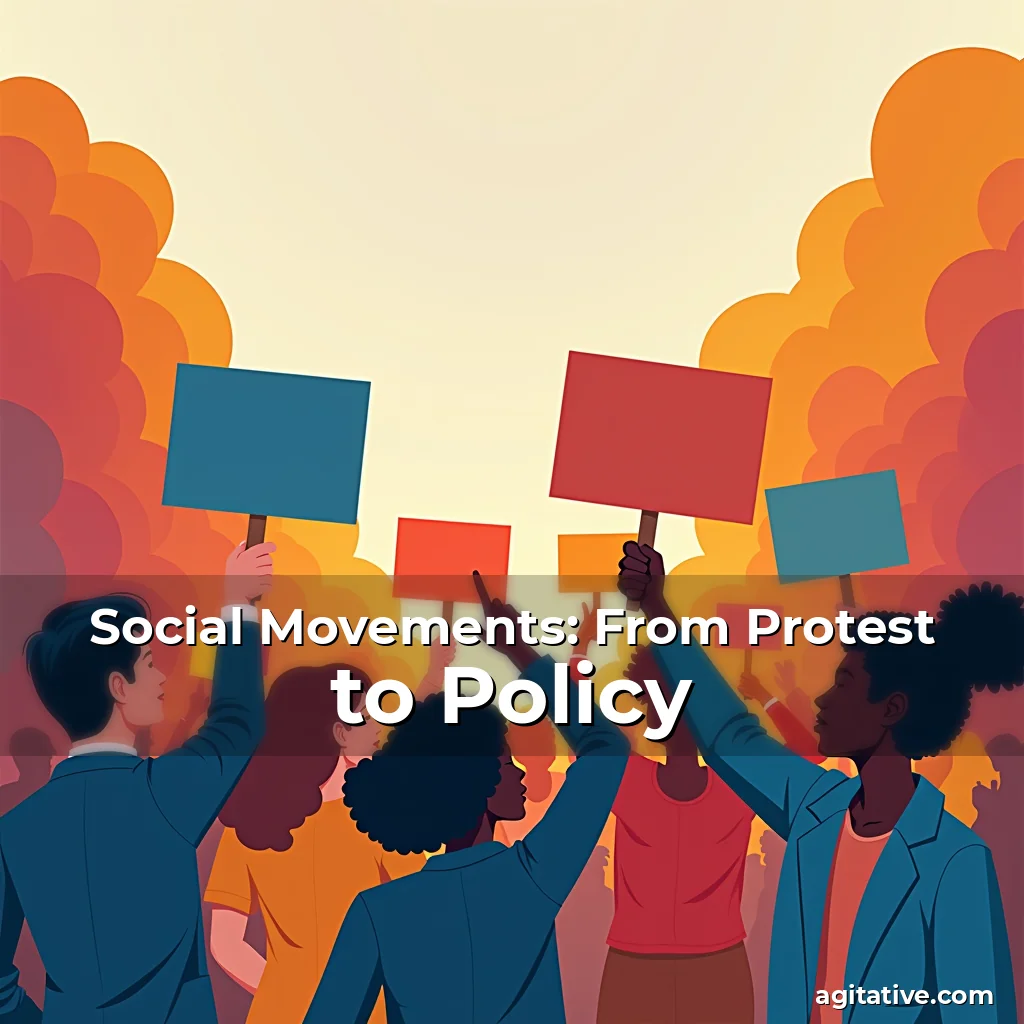
Social Movements: From Protest to Policy
The history of human progress is deeply intertwined with the rise and fall of social movements. These collective actions have shaped societies from ancient times to the modern digital age, challenging power structures, demanding rights, and redefining norms.
From labor strikes in industrial revolutions to climate demonstrations in today’s global cities, social movements remain vital forces driving societal transformation. They are not only reactions to injustice but also blueprints for what a better world could look like.
The Foundations of Social Change
A social movement emerges when individuals unite around shared grievances and aspirations. This collective action can take many forms—from peaceful protests to grassroots organizing—each aiming to influence public policy or cultural attitudes.
The roots of such movements often lie in systemic inequalities that affect marginalized communities. Whether addressing racial discrimination, economic disparity, or environmental degradation, these issues serve as catalysts for mobilization.
Successful movements rely heavily on clear objectives and strategic planning. Organizers identify key demands, develop outreach strategies, and build coalitions across diverse groups sharing similar values.
While spontaneous uprisings can spark attention, sustained impact requires careful coordination. Leaders must balance passion with pragmatism to navigate political landscapes effectively without losing sight of their core mission.
Historical Landmarks in Activism
Throughout history, certain moments stand out as turning points where social movements achieved significant victories through sheer determination and unity.
The Civil Rights Movement in the United States during the 1960s exemplifies how organized resistance against segregation led to landmark legislation and lasting societal changes.
- Martin Luther King Jr.’s leadership: His advocacy for nonviolent protest helped sway both public opinion and policymakers toward equality.
- Brown v. Board of Education: This Supreme Court decision outlawed school segregation, marking a pivotal legal victory for civil rights activists.
- Rosa Parks’ defiance: Her arrest sparked nationwide bus boycotts that galvanized support for ending racial discrimination in transportation systems.
Similarly, India’s independence struggle under Mahatma Gandhi showcased the effectiveness of mass non-cooperation campaigns against colonial rule.
Gandhi’s Salt March demonstrated how simple acts of civil disobedience could challenge oppressive regimes by inspiring millions to participate in lawful yet defiant actions.
Digital Age Innovations in Advocacy
In recent years, technology has revolutionized how people organize, communicate, and sustain social movements worldwide. Digital platforms enable instant information sharing at unprecedented scales.
Social media applications allow activists to reach broader audiences instantly while coordinating efforts efficiently across geographical boundaries. Hashtags become rallying cries for solidarity and awareness.
Online petitions and crowdfunding mechanisms provide alternative avenues for funding causes beyond traditional charity models. These tools empower individuals who may lack resources but possess strong convictions.
However, reliance on digital networks introduces new challenges regarding misinformation spread and potential surveillance risks faced by participants engaged in online activism.
Cyberactivism complements physical protests by amplifying messages globally; however, it cannot replace tangible community engagement essential for long-term success within local contexts.
Strategies Behind Effective Mobilizations
Evaluating successful contemporary examples reveals commonalities among effective movement strategies regardless of time period or location.
Building broad-based coalitions increases visibility and legitimacy among various stakeholders including politicians, businesses, religious institutions, etc., thereby enhancing chances of achieving policy reforms.
Clear communication channels ensure consistent messaging reaches target demographics accurately without diluting primary goals due to misinterpretation or distortion.
Adaptive leadership styles accommodate evolving circumstances while maintaining coherent direction towards ultimate objectives even amidst external pressures.
Fundraising initiatives tailored specifically to each campaign help maintain operational continuity especially during prolonged phases requiring continuous effort over extended periods.
Legal preparedness ensures compliance with laws governing assembly rights thus minimizing unnecessary confrontations with authorities potentially hindering progress made so far.
Challenges Facing Modern Activists
Despite technological advancements aiding organization capabilities, modern day advocates face numerous obstacles that test resilience daily.
Political polarization creates hostile environments making consensus building difficult particularly concerning divisive topics such as immigration policies or healthcare access.
Economic disparities limit participation rates since those living paycheck-to-paycheck might prioritize immediate financial needs over contributing time精力投入到社会运动中。
Media representation often distorts narratives portraying protesters negatively which undermines credibility despite genuine intentions behind their cause.
Environmental concerns add another layer complexity as climate-related disasters increasingly disrupt normal life affecting ability concentrate energy solely onto activist endeavors.
To overcome these hurdles requires innovative approaches leveraging available resources creatively rather than adhering strictly conventional methods known previously.
Global Perspectives on Contemporary Issues
Taking an international view highlights diverse struggles ongoing simultaneously across continents reflecting universal themes related justice equity sustainability.
Climate justice movements emphasize intersectionality linking ecological preservation with socioeconomic factors impacting vulnerable populations disproportionately affected by pollution or resource depletion.
Youth-led initiatives dominate current discourse showing younger generations taking forefront roles pushing governments adopt bolder measures combatting global warming accelerating transition renewable energy sources.
LGBTQ+ rights expansions continue gaining momentum through judicial rulings recognizing equal protections alongside legislative amendments codifying anti-discrimination safeguards workplaces schools hospitals everywhere.
Women’s liberation fronts expand scope beyond gender equality focusing empowerment through education employment opportunities dismantling patriarchal norms perpetuating inequality systematically embedded cultures.
Cross-border collaborations strengthen position marginalized voices advocating mutual interests reinforcing solidarity against common adversaries seeking to uphold status quo resisting transformative changes threatening existing power dynamics.
Measuring Impact Through Data Analysis
Analyzing quantitative data provides objective measure assessing efficacy implemented strategies pursued respective campaigns throughout different timelines locations.
Surveys tracking demographic shifts illustrate changing perceptions surrounding targeted issues indicating whether awareness levels increased significantly post-campaign launch.
Policy analysis reveals direct outcomes resulting from lobbying efforts demonstrating extent legislative frameworks altered accordingly reflect advocated positions successfully integrated official agendas.
Economic indicators reveal indirect effects stemming from corporate responsibility commitments aligning business operations sustainable practices reducing carbon footprints benefiting ecosystems financially incentivizing greener alternatives adoption widely accepted sectors formerly resistant adopting eco-friendly solutions initially.
Comparative studies highlight regional differences influencing success probabilities highlighting need localized adaptations considering unique contextual variables shaping environment where particular initiative originates intends operate primarily.
Longitudinal research tracks evolution trends revealing patterns recurrence suggesting cyclical nature some phenomena necessitating periodic reassessments adjusting tactics responding emerging challenges dynamically instead relying static models obsolete outdated scenarios.
Future Trajectories in Advocacy Work
Predicting future directions involves examining present trajectories identifying probable evolutions based observed behaviors patterns currently unfolding globally.
Artificial intelligence integration promises enhanced analytical capacities enabling predictive modeling anticipate opposition responses strategize countermeasures preemptively before conflicts escalate uncontrollable levels.
Decentralized governance models facilitate bottom-up decision-making processes empowering communities self-regulate according participatory principles fostering inclusive environments promoting equitable distribution benefits accrued collaborative ventures initiated locally scaled appropriately national international arenas.
Biotechnology breakthroughs introduce ethical dilemmas relating genetic engineering prompting debates balancing scientific advancement humanitarian considerations ensuring technologies developed responsibly applied ethically serving humanity collectively rather exploiting vulnerabilities exacerbate inequalities already prevalent society today.
Virtual reality experiences immerse users emotionally intellectually exposing realities others endure encouraging empathy understanding catalyzing behavioral changes leading greater willingness engage supportive actions promoting positive transformations conducive constructive dialogue necessary resolving contentious disputes amicably peacefully.
Interdisciplinary collaboration becomes imperative tackling multifaceted problems demanding expertise spanning fields science policy law ethics economics sociology psychology etc working synergistically devise holistic solutions addressing root causes underlying complex issues confronting civilization facing unprecedented challenges ahead require coordinated multi-pronged approaches integrating knowledge diverse disciplines cultivating comprehensive perspectives capable navigating intricacies modern existence.
Conclusion
Social movements continue to shape our world profoundly, proving that collective action remains indispensable in pursuing meaningful change.
Whether fighting for civil liberties, environmental protection, or economic fairness, these movements remind us of the power we hold when united behind common causes.
As we move forward, embracing innovation while staying grounded in principle will determine the trajectory of upcoming advocacy efforts shaping tomorrow’s landscape.
Every voice matters, every action counts—in the grand tapestry of social change, your involvement makes all the difference.


news is a contributor at Agitative. We are committed to providing well-researched, accurate, and valuable content to our readers.
You May Also Like

Urgent vs Gentle Call to Action Approaches
The Power Dynamics Behind Urgent Calls to Action Urgent calls to action leverage emotional triggers to prompt rapid responses. These...

Workplace Activism Trends in Tech
The Rise of Digital Resistance: How Online Movements Are Shaping Global Activism In an era defined by rapid technological advancement,...

Digital vs Traditional Influential Campaigns
The Evolution of Activism in the Digital Age: How Campaigns Shape Social Change In an era defined by digital transformation,...

Historical Societal Change Catalysts Examined
Historical Societal Change Catalysts Examined The forces that drive societal transformation are as complex as they are profound. From revolutions...