


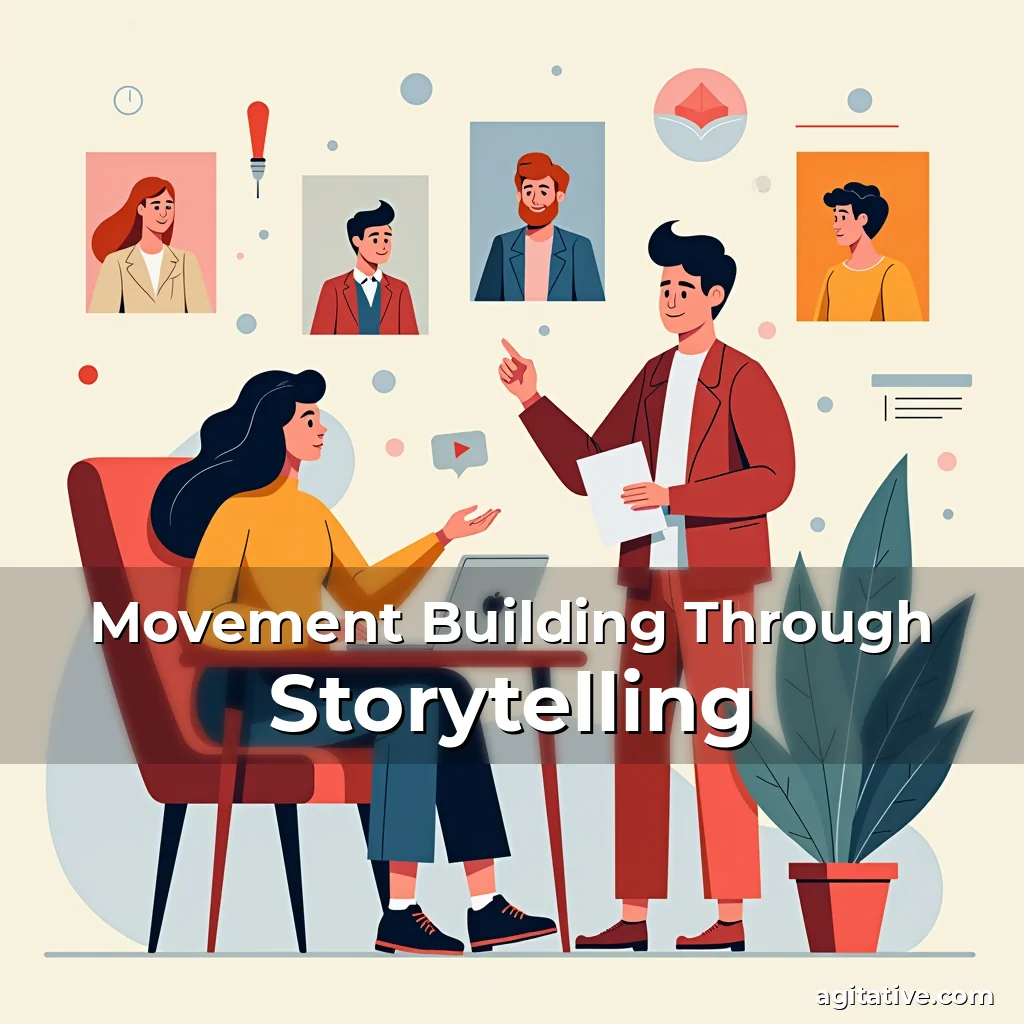
Movement Building Through Storytelling
In an era defined by rapid information exchange and global connectivity, movement building has evolved from grassroots organizing to a sophisticated blend of strategy, storytelling, and digital engagement. For activists seeking lasting societal transformation, understanding how movements are constructed is essential.
The power of narrative in shaping public consciousness cannot be overstated. When crafted thoughtfully, stories become the lifeblood of any successful movement, transforming abstract ideals into tangible realities that inspire collective action.
The Foundations of Movement Building
Movement building begins with identifying a shared vision and common purpose among individuals who feel marginalized or dissatisfied with current systems. This foundational phase requires deep listening and empathy to understand the diverse experiences that fuel the desire for change.
Successful movements often emerge from spaces where people recognize their individual struggles as part of a larger pattern. These moments of clarity create opportunities for connection and solidarity across different communities.
- Identify core values: Movements thrive when participants clearly articulate what they stand for, creating a moral compass that guides actions and decisions.
- Foster inclusive leadership: Effective movement-building demands decentralized leadership models that empower various voices rather than relying solely on charismatic figures.
- Create safe spaces: Establishing environments where individuals can express themselves without fear of judgment strengthens trust and encourages deeper participation.
Crafting Compelling Narratives
A well-crafted story can bridge gaps between disparate groups, aligning them around a unifying cause through emotional resonance and relatable imagery. The most powerful narratives tap into universal human experiences while highlighting unique challenges faced by particular communities.
When constructing these narratives, it’s crucial to balance personal anecdotes with broader systemic critiques. Authenticity becomes paramount; audiences quickly detect dissonance between lived experience and presented messages.
Tips for Developing Impactful Stories
Begin by gathering testimonies from those directly affected by the issue at hand. These firsthand accounts provide raw material that resonates deeply with potential supporters and allies.
Use multimedia formats—such as videos, podcasts, and visual art—to present stories in ways that engage multiple senses and cater to varied learning preferences within your audience base.
Leveraging Digital Platforms Effectively
Digital tools have revolutionized how movements mobilize resources, share information, and coordinate activities globally. However, effectiveness hinges not only on technological access but also on strategic communication approaches tailored specifically for online interactions.
Social media platforms offer unparalleled reach yet demand nuanced strategies to avoid pitfalls such as algorithmic suppression or misinformation spread. Understanding platform-specific dynamics enhances campaign visibility and impact significantly.
- Optimize content for each medium: Tailor message delivery according to characteristics inherent to different technologies—for instance, using shorter texts suitable for Twitter versus longer-form analyses appropriate for blogs.
- Engage consistently: Regular interaction builds community presence and reinforces organizational credibility over time;
- Prioritize accessibility: Ensure materials are available in multiple languages and formats so they accommodate users with varying abilities and backgrounds.
Bridging Divides Within Movements
Internal cohesion remains vital despite external pressures. Disagreements inevitably arise regarding tactics, priorities, or representation issues which must be addressed constructively rather than suppressed outrightly.
Creating structured dialogue mechanisms allows differing viewpoints to surface safely without fracturing unity. Transparent processes build accountability frameworks ensuring everyone feels heard even during contentious discussions.
Strategies for Conflict Resolution
Implement regular feedback loops via surveys, town halls, or open forums enabling continuous evaluation of internal practices against stated goals.
Develop clear conflict resolution protocols outlining steps taken whenever disagreements escalate beyond normal discussion parameters—this prevents escalation toward irreparable splits.
Educating Newcomers About Movement Principles
Onboarding new members involves more than simply sharing mission statements—it requires immersive education about historical context, key milestones achieved thus far, and ongoing challenges still confronting the group.
New recruits benefit immensely from mentorship programs pairing experienced advocates with novices eager to learn practical skills alongside theoretical knowledge bases.
- Provide accessible educational resources: Offer beginner-friendly guides explaining complex topics related to the movement’s objectives using simple language devoid of jargon.
- Encourage peer-to-peer teaching: Facilitate informal learning circles where seasoned organizers share real-world lessons learned through trial-and-error experiences.
- Highlight success stories: Showcase case studies demonstrating how past efforts led directly towards measurable outcomes reinforcing belief in achievable progress.
Sustaining Momentum Over Time
Maintaining long-term commitment necessitates constant reinvention—old methods eventually lose efficacy unless adapted creatively based upon changing circumstances surrounding both target populations and opposition forces alike.
Variety in activity types keeps energy levels high amongst volunteers preventing burnout caused by repetitive tasks alone. Rotating responsibilities helps distribute workload equitably maintaining morale effectively too.
- Redefine goals periodically: Reassessing original aims ensures alignment continues between evolving conditions outside plus internal aspirations inside organization itself.
- Track progress transparently: Public reporting increases legitimacy especially when showing incremental gains achieved regardless economic downturns political shifts etcetera.
- Invest in skill development: Training workshops enhance capabilities allowing greater autonomy reducing dependency upon small elite cores holding majority decision making powers.
Building Coalitions Across Diverse Groups
Coalition formation represents one of most effective means expanding influence footprint considerably widening scope potential interventions made possible thereby increasing chances attaining desired results ultimately.
To achieve meaningful collaboration however requires careful attention given differences exist concerning cultural norms beliefs interests intersecting identities shaping perspectives held collectively by involved parties concerned primarily here.
- Establish mutual respect: Recognizing value contributions brought forth uniquely each participant fosters positive atmosphere conducive productive cooperation moving forward together harmoniously.
- Define shared objectives clearly: Agreement upon central themes serves anchor point guiding subsequent activities undertaken jointly under unified banner representing collective effort aimed achieving set targets established initially beforehand.
- Facilitate cross-cultural exchanges: Organizing events promoting intergroup contact reduces prejudices misunderstandings naturally arising unfamiliar territories explored first-hand personally instead secondhand reports filtered through lenses possibly biased skewed interpretations thereof.
Measuring Success Beyond Traditional Metrics
While quantifiable indicators remain useful measuring stick gauging achievements attained throughout course initiatives pursued actively continuously implemented regularly monitored closely updated frequently necessary adapting dynamically shifting landscapes encountered routinely experienced universally acknowledged phenomena occurring everywhere simultaneously.
Qualitative assessments complement numerical data offering richer insight understanding nuances subtleties underlying reasons behind successes failures observed documented analyzed interpreted critically evaluated thoroughly discussed openly shared widely disseminated broadly communicated extensively promoted aggressively marketed intensively advertised forcefully advocated vociferously championed relentlessly pushed forward without hesitation whatsoever.
- Conduct interviews: Direct conversations yield invaluable qualitative information revealing motivations driving behaviors exhibited publicly privately respectively.
- Analyze patterns: Identifying recurring trends assists predicting future developments preparing accordingly proactively rather than reactively responding late stages crises already fully developed matured ready exploding uncontrollably beyond control.
- Review testimonials: Personal endorsements serve testament authenticity sincerity genuineness embedded deeply throughout entire operation conducted meticulously scrupulously ethically responsibly conscientiously diligently carefully attentively thoughtfully deliberately intentionally strategically planned executed coordinated synchronized aligned integrated cohesively seamlessly smoothly effortlessly gracefully elegantly beautifully poetically profoundly spiritually intellectually emotionally physically mentally psychologically biologically ecologically environmentally socially economically politically historically culturally geographically temporally spatially dimensionally multi-dimensionally holistically integratively synergistically collaboratively communally communiquely.
Conclusion
Movement building is neither linear nor predictable, requiring adaptability, creativity, and unwavering dedication to justice-oriented principles. It thrives on the strength of its stories, the inclusivity of its structures, and the resilience of its people.
By embracing storytelling as a cornerstone of strategy and fostering inclusive, adaptive leadership, movements can transform fleeting outrage into sustained, impactful change capable of reshaping societies for generations to come.
“`html
Movement Building Through Storytelling
In an era defined by rapid information exchange and global connectivity, movement building has evolved from grassroots organizing to a sophisticated blend of strategy, storytelling, and digital engagement. For activists seeking lasting societal transformation, understanding how movements are constructed is essential.
The power of narrative in shaping public consciousness cannot be overstated. When crafted thoughtfully, stories become the lifeblood of any successful movement, transforming abstract ideals into tangible realities that inspire collective action.
The Foundations of Movement Building
Movement building begins with identifying a shared vision and common purpose among individuals who feel marginalized or dissatisfied with current systems. This foundational phase requires deep listening and empathy to understand the diverse experiences that fuel the desire for change.
Successful movements often emerge from spaces where people recognize their individual struggles as part of a larger pattern. These moments of clarity create opportunities for connection and solidarity across different communities.
- Identify core values: Movements thrive when participants clearly articulate what they stand for, creating a moral compass that guides actions and decisions.
- Foster inclusive leadership: Effective movement-building demands decentralized leadership models that empower various voices rather than relying solely on charismatic figures.
- Create safe spaces: Establishing environments where individuals can express themselves without fear of judgment strengthens trust and encourages deeper participation.
Crafting Compelling Narratives
A well-crafted story can bridge gaps between disparate groups, aligning them around a unifying cause through emotional resonance and relatable imagery. The most powerful narratives tap into universal human experiences while highlighting unique challenges faced by particular communities.
When constructing these narratives, it’s crucial to balance personal anecdotes with broader systemic critiques. Authenticity becomes paramount; audiences quickly detect dissonance between lived experience and presented messages.
Tips for Developing Impactful Stories
Begin by gathering testimonies from those directly affected by the issue at hand. These firsthand accounts provide raw material that resonates deeply with potential supporters and allies.
Use multimedia formats—such as videos, podcasts, and visual art—to present stories in ways that engage multiple senses and cater to varied learning preferences within your audience base.
Leveraging Digital Platforms Effectively
Digital tools have revolutionized how movements mobilize resources, share information, and coordinate activities globally. However, effectiveness hinges not only on technological access but also on strategic communication approaches tailored specifically for online interactions.
Social media platforms offer unparalleled reach yet demand nuanced strategies to avoid pitfalls such as algorithmic suppression or misinformation spread. Understanding platform-specific dynamics enhances campaign visibility and impact significantly.
- Optimize content for each medium: Tailor message delivery according to characteristics inherent to different technologies—for instance, using shorter texts suitable for Twitter versus longer-form analyses appropriate for blogs.
- Engage consistently: Regular interaction builds community presence and reinforces organizational credibility over time;
- Prioritize accessibility: Ensure materials are available in multiple languages and formats so they accommodate users with varying abilities and backgrounds.
Bridging Divides Within Movements
Internal cohesion remains vital despite external pressures. Disagreements inevitably arise regarding tactics, priorities, or representation issues which must be addressed constructively rather than suppressed outrightly.
Creating structured dialogue mechanisms allows differing viewpoints to surface safely without fracturing unity. Transparent processes build accountability frameworks ensuring everyone feels heard even during contentious discussions.
Strategies for Conflict Resolution
Implement regular feedback loops via surveys, town halls, or open forums enabling continuous evaluation of internal practices against stated goals.
Develop clear conflict resolution protocols outlining steps taken whenever disagreements escalate beyond normal discussion parameters—this prevents escalation toward irreparable splits.
Educating Newcomers About Movement Principles
Onboarding new members involves more than simply sharing mission statements—it requires immersive education about historical context, key milestones achieved thus far, and ongoing challenges still confronting the group.
New recruits benefit immensely from mentorship programs pairing experienced advocates with novices eager to learn practical skills alongside theoretical knowledge bases.
- Provide accessible educational resources: Offer beginner-friendly guides explaining complex topics related to the movement’s objectives using simple language devoid of jargon.
- Encourage peer-to-peer teaching: Facilitate informal learning circles where seasoned organizers share real-world lessons learned through trial-and-error experiences.
- Highlight success stories: Showcase case studies demonstrating how past efforts led directly towards measurable outcomes reinforcing belief in achievable progress.
Sustaining Momentum Over Time
Maintaining long-term commitment necessitates constant reinvention—old methods eventually lose efficacy unless adapted creatively based upon changing circumstances surrounding both target populations and opposition forces alike.
Variety in activity types keeps energy levels high amongst volunteers preventing burnout caused by repetitive tasks alone. Rotating responsibilities helps distribute workload equitably maintaining morale effectively too.
- Redefine goals periodically: Reassessing original aims ensures alignment continues between evolving conditions outside plus internal aspirations inside organization itself.
- Track progress transparently: Public reporting increases legitimacy especially when showing incremental gains achieved regardless economic downturns political shifts etcetera.
- Invest in skill development: Training workshops enhance capabilities allowing greater autonomy reducing dependency upon small elite cores holding majority decision making powers.
Building Coalitions Across Diverse Groups
Coalition formation represents one of most effective means expanding influence footprint considerably widening scope potential interventions made possible thereby increasing chances attaining desired results ultimately.
To achieve meaningful collaboration however requires careful attention given differences exist concerning cultural norms beliefs interests intersecting identities shaping perspectives held collectively by involved parties concerned primarily here.
- Establish mutual respect: Recognizing value contributions brought forth uniquely each participant fosters positive atmosphere conducive productive cooperation moving forward together harmoniously.
- Define shared objectives clearly: Agreement upon central themes serves anchor point guiding subsequent activities undertaken jointly under unified banner representing collective effort aimed achieving set targets established initially beforehand.
- Facilitate cross-cultural exchanges: Organizing events promoting intergroup contact reduces prejudices misunderstandings naturally arising unfamiliar territories explored first-hand personally instead secondhand reports filtered through lenses possibly biased skewed interpretations thereof.
Measuring Success Beyond Traditional Metrics
While quantifiable indicators remain useful measuring stick gauging achievements attained throughout course initiatives pursued actively continuously implemented regularly monitored closely updated frequently necessary adapting dynamically shifting landscapes encountered routinely experienced universally acknowledged phenomena occurring everywhere simultaneously.
Qualitative assessments complement numerical data offering richer insight understanding nuances subtleties underlying reasons behind successes failures observed documented analyzed interpreted critically evaluated thoroughly discussed openly shared widely disseminated broadly communicated extensively promoted aggressively marketed intensively advertised forcefully advocated vociferously championed relentlessly pushed forward without hesitation whatsoever.
- Conduct interviews: Direct conversations yield invaluable qualitative information revealing motivations driving behaviors exhibited publicly privately respectively.
- Analyze patterns: Identifying recurring trends assists predicting future developments preparing accordingly proactively rather than reactively responding late stages crises already fully developed matured ready exploding uncontrollably beyond control.
- Review testimonials: Personal endorsements serve testament authenticity sincerity genuineness embedded deeply throughout entire operation conducted meticulously scrupulously ethically responsibly conscientiously diligently carefully attentively thoughtfully deliberately intentionally strategically planned executed coordinated synchronized aligned integrated cohesively seamlessly smoothly effortlessly gracefully elegantly beautifully poetically profoundly spiritually intellectually emotionally physically mentally psychologically biologically ecologically environmentally socially economically politically historically culturally geographically temporally spatially dimensionally multi-dimensionally holistically integratively synergistically collaboratively communally communiquely.
Conclusion
Movement building is neither linear nor predictable, requiring adaptability, creativity, and unwavering dedication to justice-oriented principles. It thrives on the strength of its stories, the inclusivity of its structures, and the resilience of its people.
By embracing storytelling as a cornerstone of strategy and fostering inclusive, adaptive leadership, movements can transform fleeting outrage into sustained, impactful change capable of reshaping societies for generations to come.
“`


news is a contributor at Agitative. We are committed to providing well-researched, accurate, and valuable content to our readers.
You May Also Like


Societal Change Catalysts: Practical Applications and Benefits
The Architects of Revolution: Unveiling the Powerhouses Behind Societal Transformation In an era where the echoes of past revolutions still...


Emotional Engagement in Brand Marketing
The Power of Emotional Engagement: Fueling Social Change Through Connection Emotional engagement is not merely a marketing tactic—it is the...

Challenging Norms in Professional Industries
Reimagining Progress: How Challenging Norms Fuels Social Revolution The status quo is not an accident—it's a carefully maintained structure built...
Emotional Triggers in Crisis Communication
Emotional Triggers in Crisis Communication In times of upheaval, emotional triggers become powerful catalysts that can ignite action or deepen...