


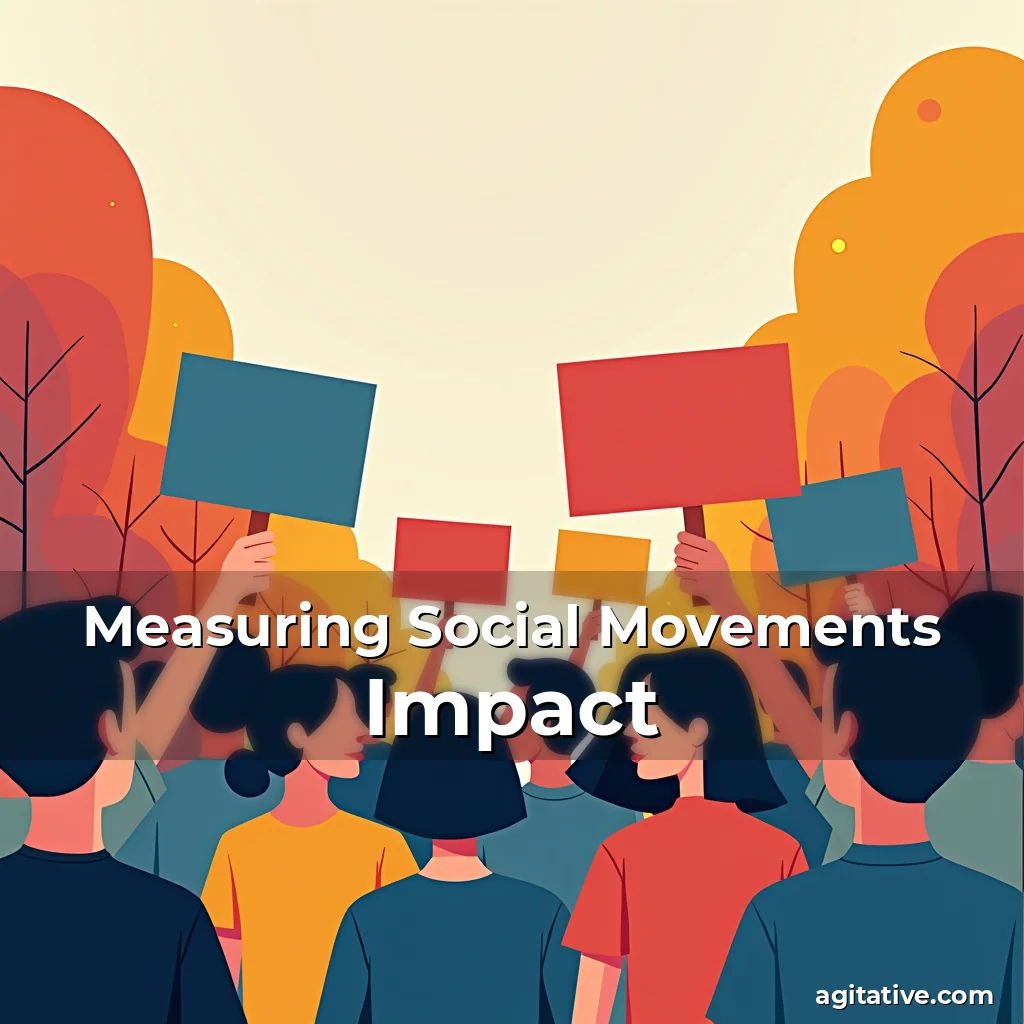
Quantifying the Ripple Effect: How Social Movements Shape Societies
The power of collective action has always been a driving force in shaping human history. From the civil rights marches that transformed legal frameworks to climate protests challenging global policies, social movements have proven their ability to ignite lasting societal shifts.
Yet understanding these transformations requires more than just witnessing events unfold. It demands careful measurement of impact across political, economic, and cultural dimensions to fully grasp how grassroots efforts evolve into systemic change.
The Anatomy of Movement Influence
Social movements create influence through structured mechanisms that extend beyond protest signs and chants. Their true reach is measured by how deeply they embed themselves within existing institutions and systems.
Movements gain traction when they align with broader societal values while addressing specific grievances. This dual alignment creates momentum that can be tracked through public opinion polls showing shifting attitudes over time.
- Institutional infiltration: When movement leaders secure advisory roles in government agencies or corporate boards, it marks significant progress towards embedding new ideas into decision-making processes
- Cultural saturation: The repetition of movement slogans in media coverage indicates successful normalization of its core messages within mainstream discourse
This institutional penetration often precedes policy changes but provides crucial groundwork for future legislative action. Cultural adoption serves as an early indicator of potential long-term success.
Evaluating Policy Transformation Metrics
Governments use specific metrics to assess whether social pressure translates into concrete lawmaking outcomes. These measurements go far beyond simple yes/no responses to policy proposals.
A key metric involves tracking how many proposed laws directly incorporate movement-related language or principles. For example, environmental movements have influenced legislation using terms like “sustainability” and “carbon neutrality.”
Drafting Legislated Change
Legislators frequently consult activist groups during bill drafting stages, creating opportunities for direct input. In some cases, entire clauses are modeled after movement manifestos or campaign platforms.
Statistical analysis reveals that bills co-sponsored by representatives from districts with high movement participation pass at higher rates than those without such connections.
Interestingly, these correlations remain strong even years after initial demonstrations began, suggesting enduring effects rather than temporary influence.
Measuring Economic Repercussions
Social movements generate tangible economic impacts both positive and negative. Their influence extends beyond ideological debates into market behaviors and investment patterns.
Consumer boycotts against unethical practices sometimes lead to immediate stock price declines, proving the financial weight of public sentiment. Conversely, green energy initiatives often attract substantial private sector investments once widely supported by citizens.
- Market disruption: Black Friday consumer campaigns organized around labor issues show how mass purchasing behavior can act as a form of economic resistance
- Investment redirection: ESG (Environmental, Social, Governance) criteria now guide trillions in investment decisions worldwide, reflecting changing priorities shaped by various movements
These economic indicators provide quantitative evidence of a movement’s growing influence in capitalist systems that typically prioritize profit above all else.
Cultural Shift Assessment Tools
Cultural evolution resulting from social movements is harder to quantify than policy changes, yet several analytical methods offer revealing insights.
Sentiment analysis tools track word usage frequency in news articles and social media posts. Trends showing increased usage of movement-associated terminology reveal gradual cultural absorption.
Media Presence Analysis
Television networks dedicate increasing airtime to movements whose causes gain widespread acceptance. Programming schedules reflect which issues resonate most with current audiences.
Data shows a clear correlation between media coverage duration and subsequent changes in public perception surveys. Longer exposure leads to more profound mindset modifications.
However, media representation quality matters equally. Positive portrayals foster better understanding whereas biased depictions risk distorting movement objectives.
Long-Term Institutional Embedding
Sustained movement impact manifests primarily through institutional permanence rather than ephemeral victories. Measuring this durability presents unique challenges requiring specialized methodologies.
One approach examines how many formal positions within government bodies or NGOs maintain ties to original movement goals decades later. These continuity markers indicate deep-rooted transformation.
Surveys tracking public trust levels in institutions previously associated with opposing viewpoints also serve as indirect measures. Declines in trust suggest successful rebranding efforts by activists.
- Bureaucratic presence: Tracking the number of agency staff trained in movement-related ethics offers insight into organizational commitment
- Curriculum inclusion: Educational systems incorporating movement histories into standard syllabi signal long-lasting cultural integration
Such institutionalization represents the highest level of achieved impact, where once-revolutionary ideas become foundational elements of governance structures.
Tech-Driven Movement Amplification
The digital age has created entirely new metrics for assessing social movement effectiveness. Online engagement indicators now rival traditional yardsticks used in past eras.
Platform analytics provide real-time data on message dissemination speed and geographic reach. Viral hashtags demonstrate rapid concept diffusion that would have taken years before internet proliferation.
Interactive mapping technologies visualize protest hotspots globally, revealing strategic coordination among distant supporters. These spatial analyses help identify emerging regional movement hubs.
- Viral velocity: Measuring how quickly a single post gains international attention reveals modern movement communication efficiency
- Digital footprints: Analyzing user demographics behind trending topics uncovers demographic trends influencing contemporary activism
This technological revolution has fundamentally changed how we measure the reach and resonance of social movements in today’s interconnected world.
Global Comparative Measurement Frameworks
While local movements require localized assessment strategies, comparative studies highlight universal patterns applicable across cultures and geographies.
Researchers have identified common phases that mark movement development trajectories worldwide. Recognizing these shared characteristics allows for cross-cultural evaluation techniques.
For instance, all transformative movements experience initial spikes in media visibility followed by periods of consolidation before achieving legislative breakthroughs.
Comparative datasets enable analysts to predict movement longevity based on observable factors present during inception stages.
- Precipitating catalysts: Identifying trigger events common to successful movements helps forecast their likely progression paths
- Civil society strength: Assessing pre-existing community infrastructure determines baseline capacity for sustained organizing efforts
These framework comparisons empower activists and scholars alike to develop universally applicable assessment models despite diverse contexts.
Measuring Psychological Resilience
Social movements succeed not only through external actions but also by fostering internal resilience within participants. Quantifying psychological transformations poses particular methodological challenges.
Pre-post survey comparisons measuring self-reported empowerment levels provide basic insights into personal growth related to involvement. More sophisticated longitudinal studies track emotional maturity over extended timelines.
Empowerment Indices
Psychologists have developed standardized questionnaires evaluating feelings of efficacy, hopefulness, and purpose among movement members. High scores correlate strongly with continued participation rates.
Analyzing trauma recovery patterns among protesters involved in confrontational situations reveals another dimension of movement-induced psychological evolution.
Cognitive flexibility assessments show improved problem-solving abilities in individuals exposed to prolonged activist environments.
Consequences of Measurement Limitations
No system for gauging social movement impact is perfect. Acknowledging limitations prevents distorted interpretations of complex phenomena.
Some critical aspects defy quantification altogether – intangible qualities like solidarity formation or moral conviction cannot be easily reduced to numerical data points.
Overreliance on measurable outputs risks overlooking foundational components that sustain movements through difficult times. Human motivation transcends statistical categorizations.
Smart assessment combines quantitative data with qualitative narratives to capture the full spectrum of movement dynamics.
Conclusion
Understanding social movements requires nuanced approaches that balance empirical data with subjective experiences. Effective measurement captures both visible achievements and less tangible contributions.
By employing multifaceted assessment techniques across political, economic, cultural, and psychological domains, activists can refine strategies that maximize societal impact while remaining mindful of inherent complexities.


news is a contributor at Agitative. We are committed to providing well-researched, accurate, and valuable content to our readers.
You May Also Like

The Fire That Fuels Revolution: Provocative Ideas as Catalysts for Social Change
The Fire That Fuels Revolution: Provocative Ideas as Catalysts for Social Change In an era defined by rapid technological advancement...
Movement Building vs Traditional Organizing
Movement Building vs Traditional Organizing Movement building represents a paradigm shift in how activists approach collective action, emphasizing sustainability, inclusivity,...
Mobilizing Communities Across Geographic Boundaries
Mobilizing Communities Across Geographic Boundaries In an era where global challenges demand collective action, mobilizing communities has become essential for...

Long-Term Raising Awareness Strategies
Rising Above Silence: Strategic Approaches to Sustained Social Awakening The urgency of social change demands more than fleeting outrage—it requires...