


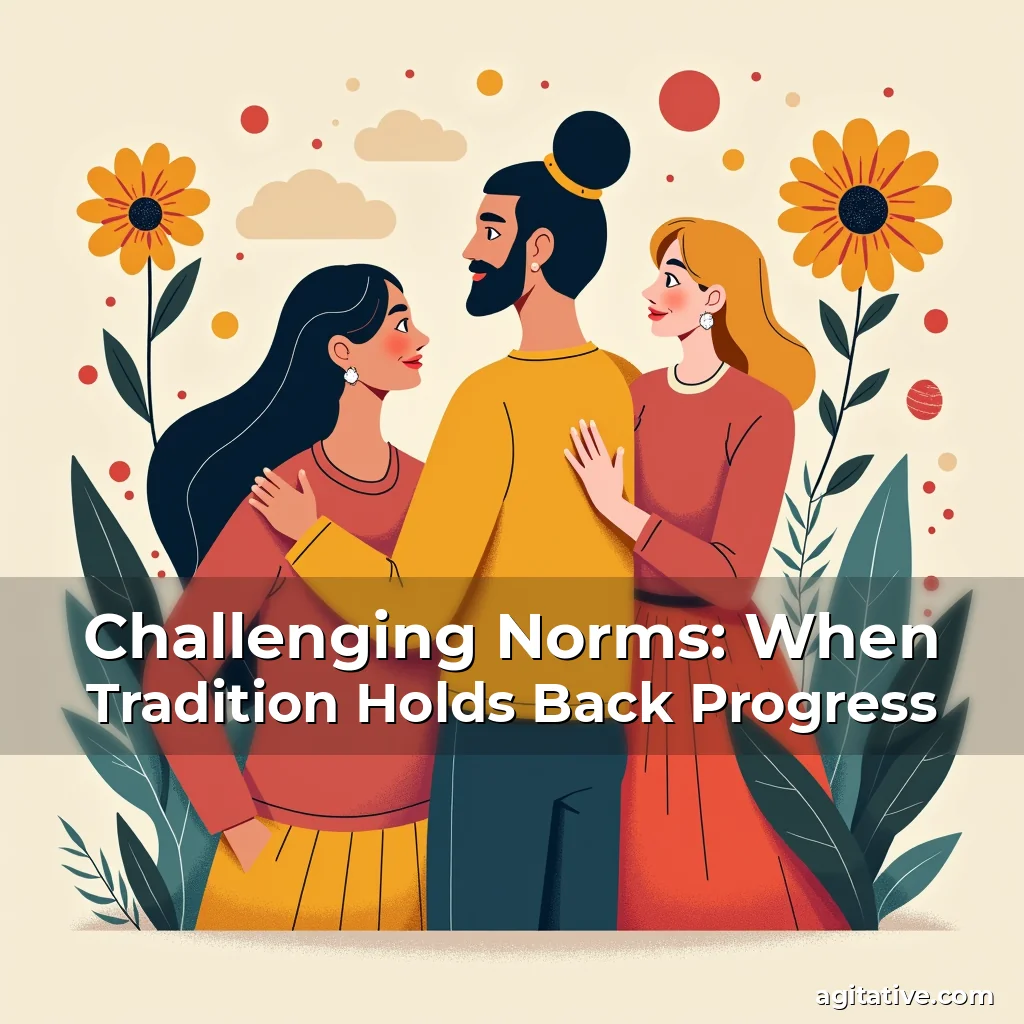
Challenging Norms: When Tradition Holds Back Progress
The world we live in is built upon layers of tradition, culture, and established systems that have shaped our societies over centuries. While many of these norms provide structure and continuity, they also often act as barriers to progress when they become rigid, exclusionary, or unjust. Challenging these norms isn’t merely an act of rebellion—it’s a necessary step toward creating a fairer, more inclusive future.
From gender roles to economic structures, from racial hierarchies to political institutions, the norms we accept without question can perpetuate inequality and stifle innovation. This article explores how challenging these deeply ingrained expectations can lead to meaningful societal transformation and why it remains one of the most vital tools in the fight for justice and equality today.
The Power of Questioning Established Systems
Societies are held together by shared beliefs and practices that evolve over time. However, what was once seen as progressive can quickly turn oppressive when new generations emerge with different values. The key lies in recognizing which traditions serve us and which hinder growth.
Historically, movements such as civil rights, LGBTQ+ advocacy, and environmentalism were born out of individuals who dared to challenge prevailing attitudes. These changemakers didn’t simply reject old ways—they reimagined them through the lens of fairness, equity, and human dignity.
Questioning the status quo requires courage:
- Courage to speak up against injustice: Many activists face backlash, censorship, or even violence for their efforts. Yet, standing firm in the belief that change is possible has driven some of history’s greatest victories.
- Courage to redefine success and failure: Traditional metrics of achievement—like wealth accumulation or power—are being challenged by those advocating for community well-being, sustainability, and collective prosperity.
- Courage to embrace uncertainty: Change brings instability, but it also opens doors to new opportunities that align better with evolving needs and aspirations.
These acts of defiance may seem small at
Reclaiming Identity Through Resistance
In many parts of the world, cultural norms dictate everything from personal relationships to professional ambitions. For marginalized communities, these rules often reinforce systemic oppression rather than uplift individuals.
Activists working within indigenous populations, queer spaces, and immigrant communities understand that identity is not static; it evolves alongside struggles for self-determination. By reclaiming narratives long suppressed by dominant powers, these groups build resilience and foster pride in their heritage while pushing back against harmful stereotypes.
A powerful example comes from Indigenous-led land protection movements across North America, where traditional knowledge coexists with modern ecological science to defend ancestral territories. Such initiatives demonstrate how honoring one’s roots doesn’t mean resisting change—it means weaving past wisdom into present action for sustainable futures.
Redefining Gender Roles and Expectations
Gender norms have been among the most pervasive forces shaping human experience throughout history. From early childhood, people are taught to conform to specific behaviors based solely on biological sex—an approach rooted more in historical necessity than natural law.
Trends show a growing recognition that gender diversity exists beyond binary constructs. Transgender and non-binary identities increasingly find visibility and acceptance as society moves away from outdated categorizations. This shift reflects broader changes in understanding human nature itself.
Feminist movements worldwide have played crucial roles in dismantling patriarchal frameworks:
- Advocacy around reproductive rights continues to be central to women’s autonomy and bodily integrity.
- Workplace policies addressing pay gaps and parental leave support greater equality between genders.
- Educational reforms promoting STEM fields for girls help dismantle myths about capability and interest related to certain subjects.
While significant strides have been made globally, there remain substantial disparities in legal protections and social acceptance depending on geographic location, religion, and class background. Continued effort is essential to ensure full inclusion regardless of perceived gender expression.
Economic Justice: Breaking Free from Capitalist Hierarchies
Capitalism has undeniably fueled technological advancement and global connectivity—but its unchecked form has also created extreme concentrations of wealth while leaving millions struggling to meet basic needs. Activists focused on economic reform argue that true freedom cannot exist under conditions of financial precarity.
Movements like universal basic income experiments, cooperative business models, and worker-owned enterprises offer alternative visions for distributing resources equitably. These approaches seek to disrupt traditional corporate dominance and empower workers to control their own destinies.
Different strategies aim at restructuring economic systems:
- Redistributive taxation: Implementing higher tax rates on ultra-wealthy individuals helps fund public services that benefit everyone.
- Worker cooperatives: Businesses owned collectively by employees prioritize employee welfare over shareholder profits.
- Universal healthcare and education: Ensuring access to quality care and learning opportunities reduces socioeconomic divides significantly.
By focusing on structural issues instead of individual responsibility alone, these solutions address root causes behind poverty, unemployment, and exploitation. They represent bold departures from conventional capitalist ideals aimed at fostering genuine security and opportunity for all citizens.
Environmental Awareness: Fighting Against Industrial Exploitation
Climate change represents perhaps the most urgent crisis facing humanity today—one largely exacerbated by extractive industries operating under profit-driven motives rather than ethical considerations. Environmental activists work tirelessly to expose these dangers and push governments towards sustainable alternatives.
Prominent figures like Greta Thunberg have galvanized youth movements demanding immediate climate action from world leaders. Their protests highlight both scientific evidence regarding rising temperatures and moral imperatives tied to intergenerational responsibilities.
Green energy transitions illustrate practical steps forward:
- Investments in solar and wind power reduce reliance on fossil fuels dramatically.
- Urban planning emphasizing green spaces improves air quality and biodiversity simultaneously.
- Corporate commitments shifting production methods lower carbon footprints effectively.
Though progress varies regionally due to differing levels of investment and policy enforcement, global awareness surrounding environmental degradation grows steadily each year. This increased consciousness lays groundwork for lasting legislative actions supporting planetary health.
Political Reform: Overhauling Outdated Governance Models
Democracy is often touted as the pinnacle of governance, yet many nations struggle with corruption scandals, voter suppression tactics, and lack of representation for minority voices. Political reformers advocate for transparent processes ensuring every citizen plays an active role in decision-making.
Voter ID laws restricting ballot access disproportionately affect low-income voters and people of color. Meanwhile, gerrymandering manipulates electoral boundaries to dilute opposition influence unfairly. Addressing these flaws demands innovative solutions backed by grassroots mobilization.
Several emerging trends promise more participatory forms of democracy:
- Direct democracy mechanisms: Referendums allow citizens direct input on local issues without intermediaries.
- Online voting platforms: Secure digital systems increase participation especially among younger demographics less likely to vote traditionally.
- Youth councils: Including young people in policymaking ensures perspectives previously ignored now shape national agendas.
Such measures aim not only to expand inclusivity but also enhance accountability within existing governmental bodies. With continued pressure from engaged citizens, reallocation of power becomes increasingly plausible despite entrenched interests resistant to change.
Education Reforms: Shaping Minds Beyond Conformity
Educational institutions play pivotal roles in either reinforcing or subverting oppressive ideologies. Standardized testing regimes frequently favor privileged students already equipped with resources enabling academic success. Reform advocates champion diverse curricula reflecting varied histories and experiences accurately.
Initiatives such as restorative justice programs replace punitive disciplinary actions with dialogue-based resolutions promoting empathy and mutual respect. Additionally, incorporating critical race theory allows learners to critically examine how racism manifests systematically rather than personally attributing blame.
Curriculum diversification yields numerous benefits including:
- Increased student engagement through culturally relevant materials.
- Better preparation for multicultural workplaces requiring cross-cultural communication skills.
- Stronger identification with educational environments leading to improved graduation rates overall.
By prioritizing holistic development over rote memorization techniques, educators cultivate curious minds capable of questioning assumptions underlying current realities. This mindset proves invaluable during times of rapid transformation necessitating adaptive thinking capabilities.
Healthcare Access: Prioritizing Human Rights Over Profit Margins
Access to affordable medical treatment remains unevenly distributed globally—with poorer regions lacking adequate facilities altogether compared to affluent areas enjoying cutting-edge technologies readily available elsewhere. Health activists emphasize universal coverage as fundamental right deserving protection irrespective of socioeconomic status.
Publicly funded healthcare models demonstrate effectiveness in providing consistent service delivery across populations. Countries implementing single-payer systems report higher life expectancies and reduced infant mortality rates relative to privatized counterparts experiencing cost-related delays or denials.
Barriers preventing equitable distribution include:
- Lobbying efforts by pharmaceutical companies influencing drug pricing regulations.
- Geographic disparities limiting reach of specialized treatments needed for rare diseases.
- Socioeconomic factors affecting ability to afford insurance premiums regularly.
Addressing these obstacles requires sustained advocacy campaigns pressuring policymakers toward comprehensive reforms benefiting all citizens equally. Only then can true equity prevail within healthcare sectors currently dominated by market dynamics favoring select beneficiaries exclusively.
Technology Ethics: Navigating Digital Age Challenges
Technological advancements continue reshaping daily lives rapidly—yet concerns arise concerning privacy violations, algorithmic bias, and monopolistic tendencies stifling competition within tech markets. Ethical discussions grow increasingly complex amid unprecedented data collection capacities afforded modern devices.
Data brokers compiling vast amounts of consumer information pose risks unless regulated appropriately. Moreover, artificial intelligence applications trained using biased datasets risk amplifying discrimination embedded historically within source material utilized for training purposes.
To mitigate potential harms associated with AI deployment:
- Implementing strict oversight protocols before releasing products containing machine learning components.
- Encouraging transparency regarding data usage agreements consumers must agree upon prior utilizing apps/services.
- Establishing independent review boards assessing impacts periodically post-launches.
As technology progresses exponentially faster than regulatory frameworks keeping pace adequately, proactive measures become imperative safeguarding liberties protected constitutionally against encroachment from private entities wielding disproportionate power online.
Intersectionality: Understanding Complex Layers Of Oppression
No single issue exists independently within society—all intersect along dimensions encompassing race, gender identity, class positionings, sexual orientation preferences, etcetera. Recognizing intersectional frameworks enables deeper comprehension required navigating multifaceted challenges faced concurrently by various groups.
Critical theorists like Kimberlé Crenshaw pioneered analyses highlighting how overlapping categories compound disadvantages experienced uniquely compared strictly singular identifiers considered separately. Applying such lenses reveals nuanced truths obscured otherwise.
Examples illustrating intersectional effects abound widely:
- Black transgender women encounter heightened vulnerability towards violence due combination racial profiling combined transphobia elements interacting synergistically.
- Latina mothers might grapple additional burdens stemming simultaneous labor force participation requirements alongside childcare obligations intensified further because language barriers prevent accessing full range employment options openly.
- Disabled queer individuals could require accommodations surpassing typical accessibility provisions normally sufficient addressing physical impairments alone without considering added complexities arising from nonconforming gender expressions potentially complicating navigation through public spaces safely.
Only acknowledging these intertwined aspects facilitates crafting targeted interventions responsive specifically tailored circumstances encountered jointly rather than tackling isolated problems sequentially neglecting interdependencies inherently present structurally.
Conclusion
Challenging norms is not simply about rejecting the past—it’s about forging a path toward a more just and inclusive future. Every movement that seeks to reshape society begins with individuals daring to ask difficult questions and envision possibilities beyond what seems achievable.
Whether fighting for equal rights, environmental preservation, or democratic reform, the essence of activism lies in persistent inquiry, compassionate resistance, and unwavering commitment to truth. As we confront increasingly complex global challenges, embracing the spirit of questioning normative structures will be essential in building resilient communities grounded in equity and solidarity.


news is a contributor at Agitative. We are committed to providing well-researched, accurate, and valuable content to our readers.
You May Also Like


Amari Colombo Presents Catalysts Of Change With Savithri Rodrigo : Two Nights . Bold Conversations With Two Women On The Brink Of Change!
The initiative aims to create a platform for women to share their stories, experiences, and insights, fostering a culture of...
Digital Activism Trends 2025
Digital Activism Trends 2025 In an era where digital spaces have become battlegrounds for justice and equity, activism has evolved...
Inspiring Change: Overcoming Resistance
Inspiring Change: Overcoming Resistance The call for transformation echoes globally, driven by passionate voices demanding justice, equity, and sustainability. Yet,...

Unveiling 2025 Santa Barbara'S Movement Building Grant Cycles: Rfp Now Open!
The FUND's Mission and ValuesThe FUND is deeply rooted in the principles of social justice and community empowerment. Their mission...