


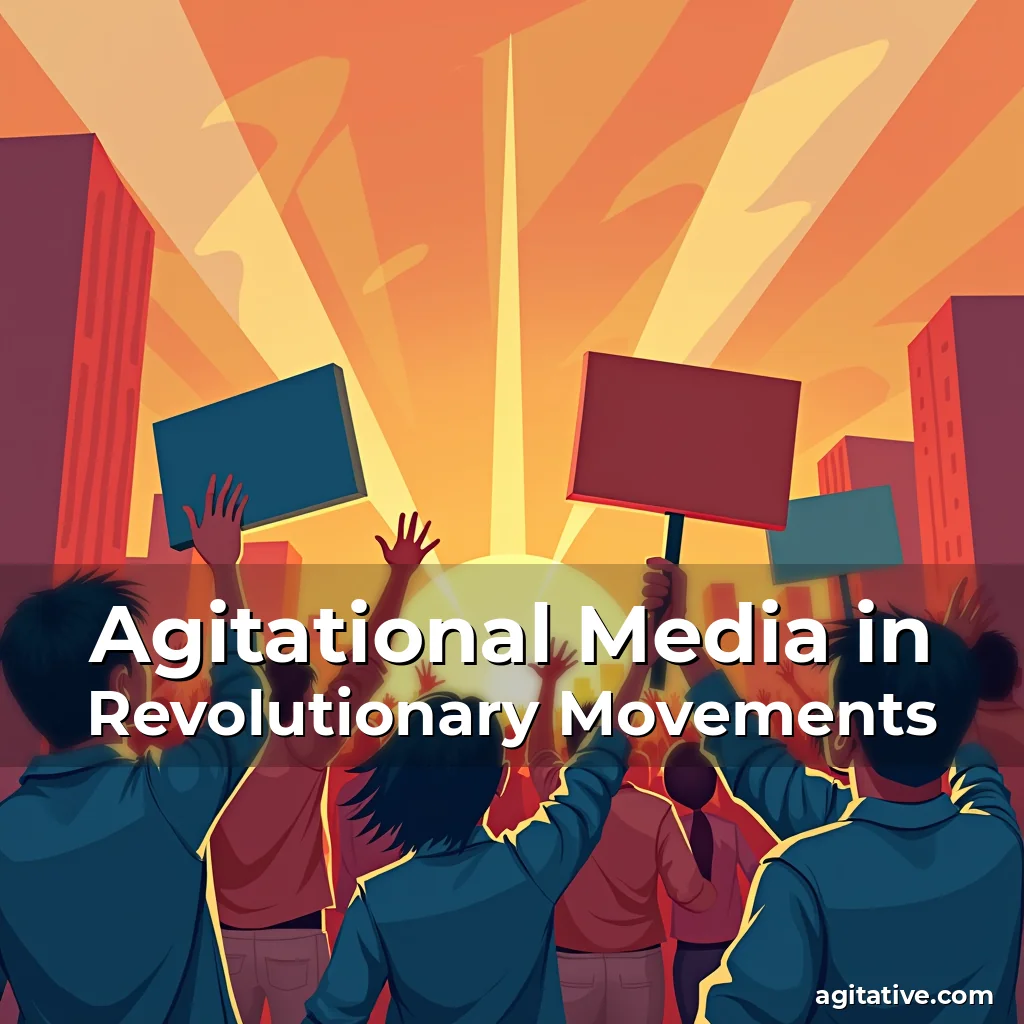
Agitational Media in Revolutionary Movements
The power of agitational media lies in its ability to ignite collective consciousness and drive societal transformation through strategic communication. Unlike traditional journalism that aims for neutrality, agitational media operates as a force multiplier within revolutionary movements, channeling outrage, hope, and demand for justice into tangible action.
In an era marked by digital upheaval and political polarization, agitational media has evolved beyond printed pamphlets and radio broadcasts. It now encompasses viral videos, protest hashtags, and decentralized online networks that challenge the status quo while amplifying marginalized voices across global landscapes.
Defining Agitational Media
At its core, agitational media is not merely information dissemination but a deliberate act of ideological warfare designed to provoke critical thought and mobilize communities toward systemic change. Its roots trace back to historical revolutions where print materials served as weapons against oppressive regimes.
This form of media thrives on emotional resonance rather than detached analysis. By framing narratives around injustice, inequality, and resistance, it transforms passive observers into active participants willing to confront entrenched power structures.
Modern iterations leverage technology to bypass institutional gatekeepers. Social media platforms, encrypted messaging apps, and independent publishing tools enable activists to distribute messages rapidly without relying on corporate-controlled channels.
- Digital Accessibility: Affordable smartphones and internet access have democratized content creation, allowing grassroots organizers to produce high-quality material from anywhere at any time.
- Decentralization: Content spreads organically through peer-to-peer sharing mechanisms rather than top-down distribution models controlled by governments or corporations.
The Historical Evolution of Agitational Media
From the fiery speeches of early labor unions to the clandestine leaflets circulated during anti-colonial struggles, agitational media has always been intertwined with moments of profound social upheaval. These materials often became symbols of defiance against authoritarian rule.
The 19th century witnessed the rise of radical newspapers like *The People’s Paper* which exposed factory conditions and galvanized worker solidarity. Similarly, underground publications in Nazi Germany provided vital counter-narratives to state propaganda.
During the Civil Rights Movement in the United States, agitational media took new forms such as televised sit-ins, freedom songs, and graphic photos capturing police brutality. These visual elements amplified public sympathy and pressured lawmakers to act.
The emergence of television news coverage transformed how agitation could reach mass audiences instantaneously. Live broadcasts of protests created urgency and forced authorities to respond under international scrutiny.
Strategies Used in Modern Agitational Media Campaigns
Contemporary campaigns employ sophisticated tactics blending storytelling with data visualization to craft compelling messages that resonate emotionally yet remain factually grounded. Memes, infographics, and interactive maps are used strategically to convey complex issues simply and memorably.
Social media algorithms play both constructive and destructive roles here. While they can exponentially increase message reach when trending topics align with activist goals, they also risk drowning out meaningful discourse amid algorithmic noise generated by automated bots.
Campaigners increasingly use multimedia approaches combining video testimonials with expert interviews to build credibility while maintaining accessibility. This hybrid model ensures diverse perspectives contribute to a unified narrative.
Data-driven storytelling techniques allow creators to translate abstract concepts into relatable human experiences. For instance, mapping poverty rates alongside local protest locations helps contextualize why certain communities resist more fervently than others.
The Psychological Impact of Agitational Messaging
Audiences subjected to consistent agitational messaging undergo measurable psychological shifts over time. Exposure increases empathy towards oppressed groups while simultaneously reducing apathy among potential supporters who might otherwise disengage from politics.
Cognitive dissonance theory suggests that repeated exposure to alternative viewpoints challenges preexisting beliefs until individuals either adopt these new ideas or intensify their opposition even further—both outcomes beneficial to movement growth.
Emotional engagement metrics show higher retention rates when messages incorporate personal stories versus purely statistical arguments. Humans connect more deeply with narratives featuring identifiable characters facing real-world dilemmas.
Studies indicate that agitational media can alter long-term behavioral patterns by normalizing dissent behaviors previously considered risky or taboo within mainstream society.
Ethical Considerations in Agitational Communication
Maintaining ethical integrity remains crucial despite the urgent need for change. Misinformation risks undermining trust and legitimacy if factual inaccuracies become embedded in widely shared content due to rapid virality cycles.
Transparency about sources and methodology strengthens credibility while protecting vulnerable populations from exploitation by well-intentioned but ill-informed advocates seeking quick impact solutions.
Balancing urgency with accuracy requires careful curation of facts before broadcasting them. Fact-checking protocols integrated into content production workflows help mitigate potential harm caused by hasty conclusions drawn from incomplete evidence.
Respecting cultural sensitivities becomes essential when addressing global issues locally since what resonates strongly in one context may appear insensitive elsewhere depending upon regional norms and histories.
Case Studies in Effective Agitational Media
The Arab Spring uprisings showcased unprecedented coordination between digital agitators and physical protesters using Twitter feeds as real-time war rooms coordinating demonstrations nationwide while countering government censorship efforts.
In India’s #MeToo movement, survivors leveraged Instagram reels and Facebook posts to share testimonies anonymously, creating a wave of awareness that led to policy reforms and increased support for sexual violence victims across different demographics.
Black Lives Matter utilized TikTok trends combined with educational content explaining systemic racism fundamentals, successfully bridging generational gaps between older civil rights veterans and younger digital natives eager to participate meaningfully.
Environmental organizations have adopted gamification strategies turning climate change education into interactive quizzes and AR experiences making sustainability concepts accessible even to those initially indifferent or dismissive of environmental concerns.
Challenges Facing Contemporary Agitational Communicators
Content moderation policies imposed by platform providers frequently result in legitimate protest-related material being flagged as inappropriate or removed altogether based on vague community guidelines favoring commercial interests over free expression ideals.
Deepfake technologies pose significant threats by enabling malicious actors to create convincing fake footage depicting peaceful demonstrators committing violent acts—an effective method for sowing discord and justifying crackdown measures against genuine activists.
Information overload reduces attention spans significantly; thus, creators must constantly innovate ways to capture fleeting viewer interest amidst competing distractions vying for limited screen time each day.
Legal repercussions including fines, arrests, or imprisonment loom heavily over anyone perceived as challenging dominant ideologies particularly in regions where press freedoms are severely restricted compared to democratic societies.
Future Trends in Agitational Media Development
Artificial intelligence will likely revolutionize personalized content delivery systems capable of adapting messaging styles dynamically according to recipient preferences detected via behavioral analytics tracking user interactions across various devices.
Augmented reality applications promise immersive learning environments where users physically experience simulated scenarios illustrating consequences of current socio-political conditions enhancing emotional investment levels dramatically beyond conventional methods.
Blockchain-based verification systems offer promising solutions ensuring authenticity checks automatically performed whenever content gets shared preventing widespread circulation of falsified documents masquerading as truthful reports.
Collaborative authorship platforms utilizing smart contracts may empower broader participation in content creation processes rewarding contributors fairly while maintaining quality control standards necessary for impactful messaging.
Conclusion
Agitational media continues evolving as a dynamic tool reshaping modern activism through innovative means of communication tailored specifically for today’s interconnected world characterized by technological advancements and shifting power dynamics.
To harness this potent medium effectively, future communicators must prioritize ethical considerations alongside creative experimentation embracing emerging technologies responsibly while remaining vigilant against manipulation attempts threatening authentic progress toward lasting social transformations.
“`


news is a contributor at Agitative. We are committed to providing well-researched, accurate, and valuable content to our readers.
You May Also Like


Positive Emotional Triggers for Motivation
The Power of Positive Emotional Triggers in Fueling Social Change Movements In an era where societal issues demand urgent attention,...
Inciting Change: First Steps for Activists
Ignite Revolution: A Blueprint for Activists Ready to Transform the World The world stands at a crossroads, where complacency meets...

Creating Influential Campaigns on Social Media
The Power of Purposeful Activism: Crafting Campaigns That Spark Global Change In an era defined by rapid information exchange and...

Inciting Change Through Education
Inciting Change Through Education In a world increasingly defined by inequality, environmental crises, and political polarization, the power of education...